
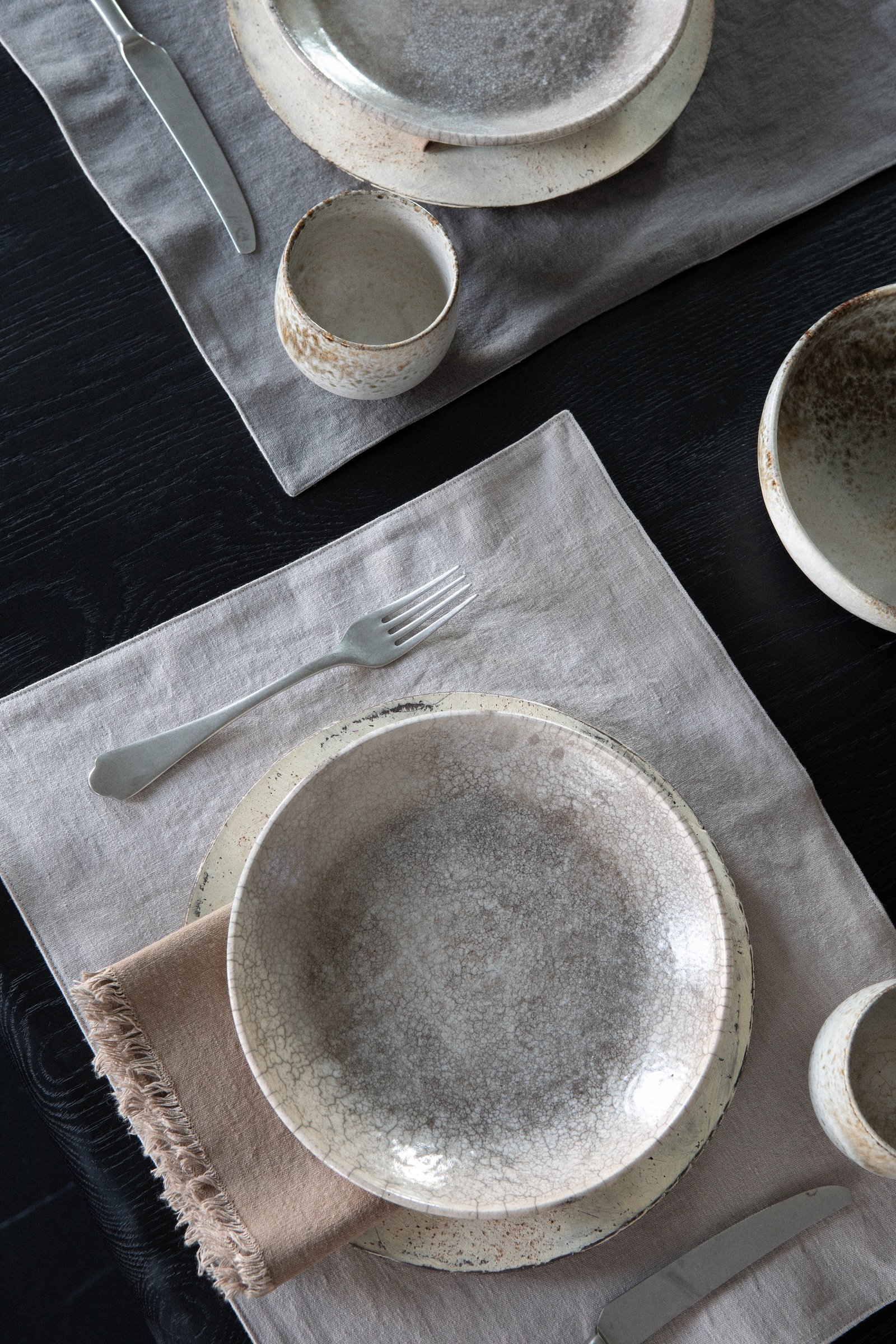
About thé-En
What the work requires, and how it arrives.
thé-En
Where a vision meets a maker — each from its own tradition, culture, and way of life — thé-En stands in between, reading what is possible, and finding the way through.
We shape not only the work itself, but the conditions that allow it to belong.
We do not source and supply. We develop work — from material and process to setting, use, and lasting presence.
We see what should be made, what is being asked for, and carry it through. At every stage — whether born, brought into connection, or welcomed into daily life.
We do not simply carry culture across. We shape work to take root and come alive in the life around it.
We stand between cultures — a practice built on access, discernment, and realization.
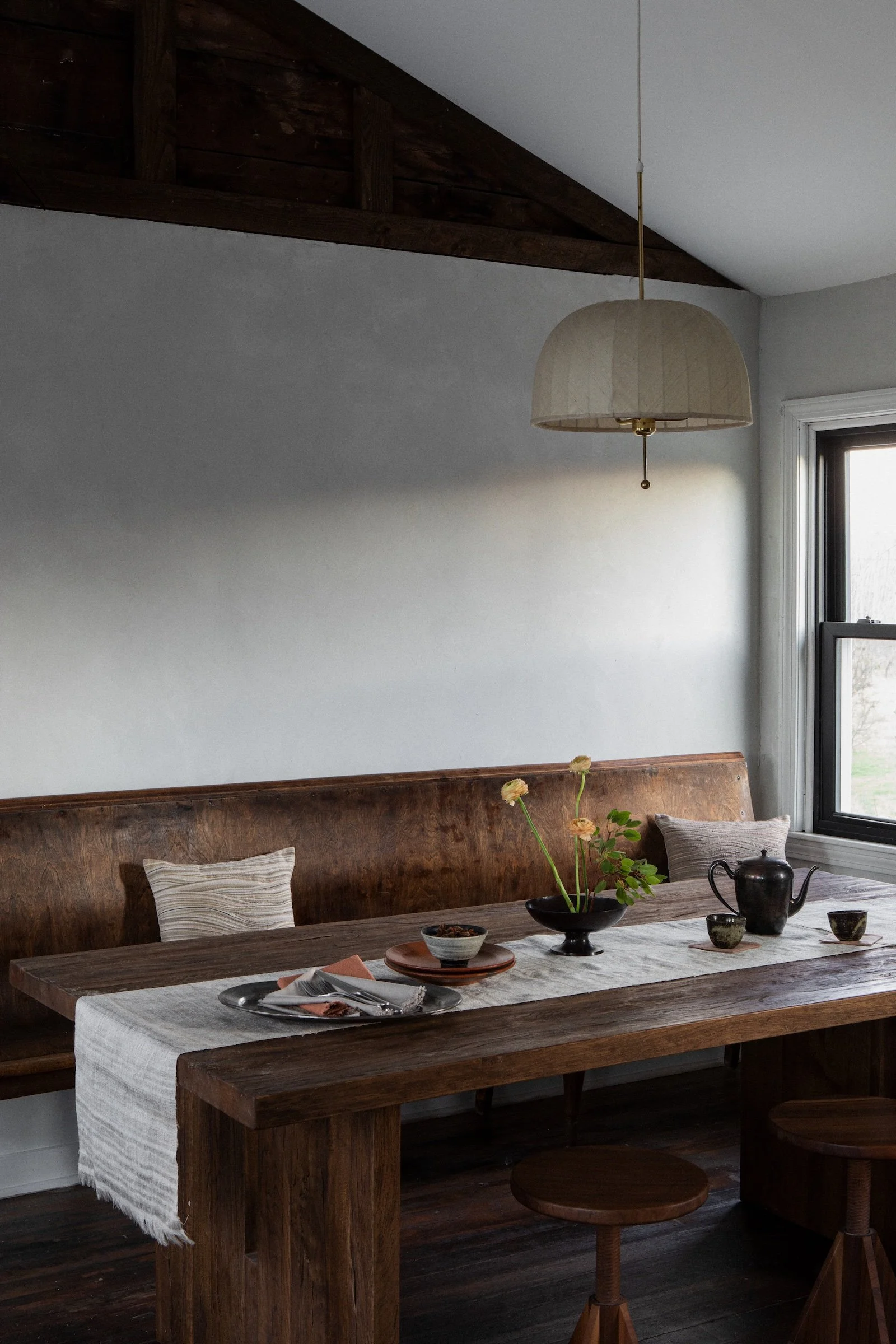
Shikkai/悉皆
The characters suggest a way of seeing.
悉 speaks to complete perception — to attend fully, to see through to what matters.
皆 speaks to the whole — everything, without exception.
Before the term became associated with a role in the Edo-period kimono trade, Shikkai can be understood more broadly as a sacred attentiveness: not the maker, not the patron, but the one who reads what is needed and brings it into being.
Within the kimono tradition, the Shikkai held the whole — coordinating makers, materials, and process from beginning to end, ensuring that each element aligned.
More than a role, Shikkai is a way of working. Nothing overlooked. Every detail considered and brought into harmony.
Shikkai works not only with what is intended, but with what emerges. Some of the most important qualities reveal themselves only through the process, and must be recognized for what they are — whether to be carried further, or brought to rest.
ひとつ残らず、ことごとく。 — Every single thing, without exception. This is Shikkai.
Founder
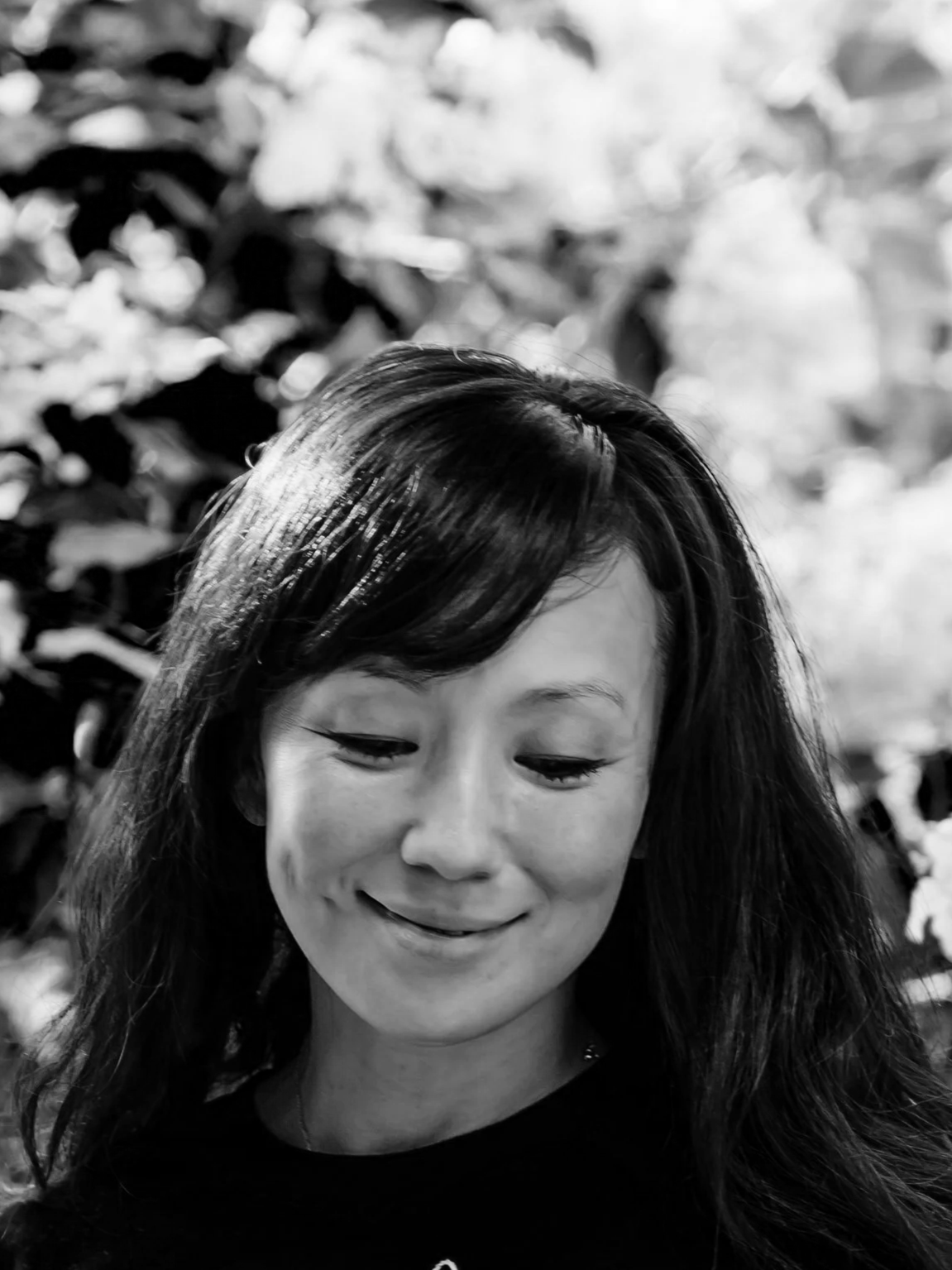
thé-En is led by Ia, born in Tokyo and raised between London, Paris, Amsterdam, Los Angeles, and New York. She read architecture before moving to Central Saint Martins in London for an MA in Multimedia — leaving the hard structure of buildings for the softer registers she had always read more naturally: interior, atmosphere, light, and the way a textile or a surface changes how a space is felt.
These two questions — what makes a space feel, and how meaning takes form in a new context — have shaped every role since.
She spent the next fifteen years in Japan, at the intersection of culture, media, and youth movement on both sides of the Pacific. As host of NHK World's Tokyo Fashion Express, she translated Japanese design and culture outward to a global audience, in sustained conversation with the figures shaping the field.
In Japanese broadcast and print, she hosted long-running programming at the edge of culture and music, and interviewed cultural figures across generations — conducting conversations in English and translating them live, not only in language but in cultural framing.
The same eye carried into the artists' own work, through styling, creative direction, and editorial collaboration with Japanese musicians reaching toward Western influence. The medium has changed since. The work has not.
The cultural-bridge work compounded from there. At Onitsuka Tiger, she translated between an Italian designer and the Japanese market, then ran the operation for the brand's first global pop-up store in SoHo, New York — holding the concept-to-placement work across Asics US, Asics Japan, and the local execution team. She advised Kondaya Genbei, one of Kyoto's most distinguished kimono houses, on global strategy — during which the Victoria and Albert Museum acquired seven obi from the house for its permanent collection. She developed cultural programming for Soho House's Dumbo House in Brooklyn. She worked as a buyer, reading what New York wanted through a Japanese lens.
Across each role, the same question: how does work cross between cultures without losing what made it itself? thé-En is the answer that practice arrived at — the architectural reading of a space, the multimedia sense of how images and meaning move, and the fifteen years of cultural translation, all held in a single practice.
The studio continues now from the Hudson Valley, in close dialogue with a Japan-based team: Kenta in Kobe, Yuji in Kyoto, and a wider contemporary shikkai network rooted in Japanese craft and restoration culture.
This role is not simply to connect people. It is to hold the conditions in which the work can arrive as it should.
Raised in many places, the more she worked, the more she found herself rooted in Japan. thé-En is what it looks like to bring that rooting here — to read the time we are in, to read the place where the work will live, and to translate between them so the work belongs.
The Name
thé-En carries several layers of meaning. Thé is the French word for tea. En evokes both en (縁) — a singular, meaningful bond — and en (円), the circle: fullness, return, and the way things come back into relation. The sound of the name also echoes teien — a garden.
For us, tea and garden are not decorative references. They point to a wider Japanese sensibility — one shaped by seasonality, attention, and the careful making of setting. In this sense, the garden is not only a place, but an environment prepared with intention, and tea is not only a drink, but a cultural practice shaped by presence, detail, and encounter.
thé-En is not about transplanting Japanese culture as-is. It is about helping it take root here with care — through relationships, collaborations, and projects that become part of life over time.
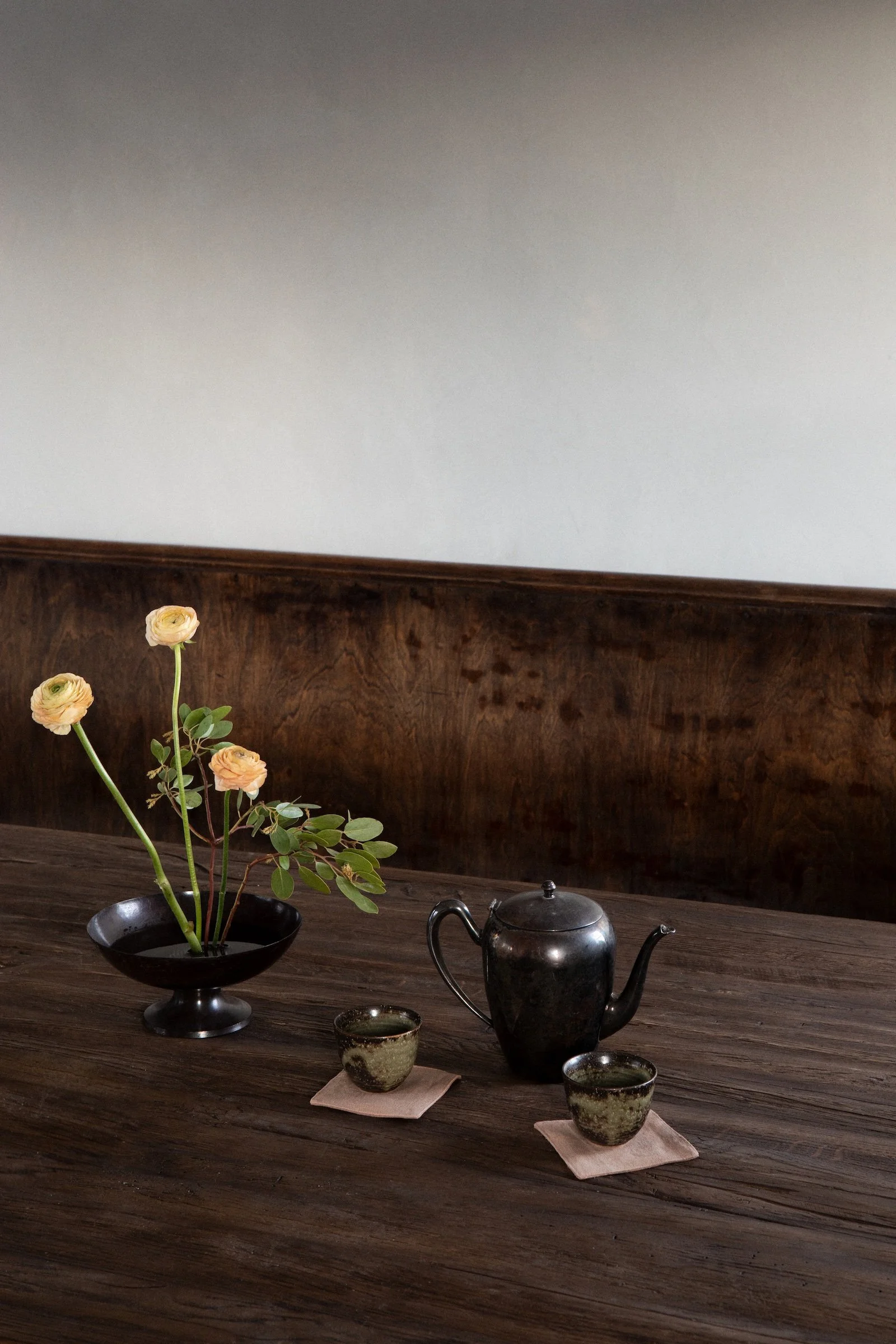
Between Craft, Design, and Art
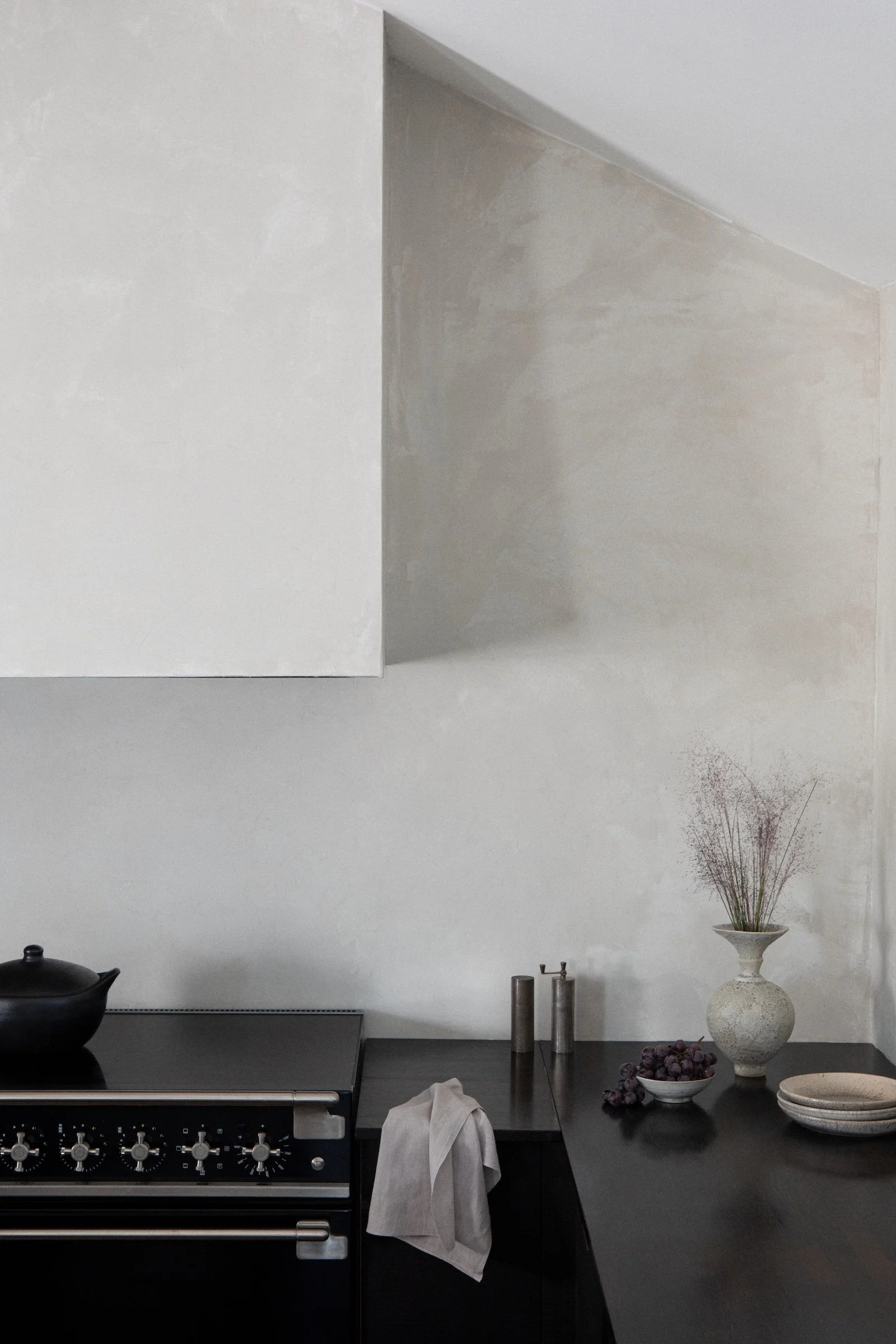
Many of the works we develop exist between categories. A textile may enter a room with the presence of art. A lamp shaped through artisan practice may carry the weight of a one-of-a-kind work. A kitchen linen may hold the same dye knowledge as a kimono in a museum collection.
We are interested in that threshold — where use, beauty, and artistic presence meet. Part of our role is to help such work be recognized, situated, and lived with as it deserves.
Legacy and Demand
If traditional making is to continue, it cannot survive on sentiment alone. It must meet meaningful demand.
Part of thé-En’s work is to cultivate that demand — carefully, selectively, and in ways that allow the legacy of making to continue without being reduced to commodity.