
Selected Work
At every scale.
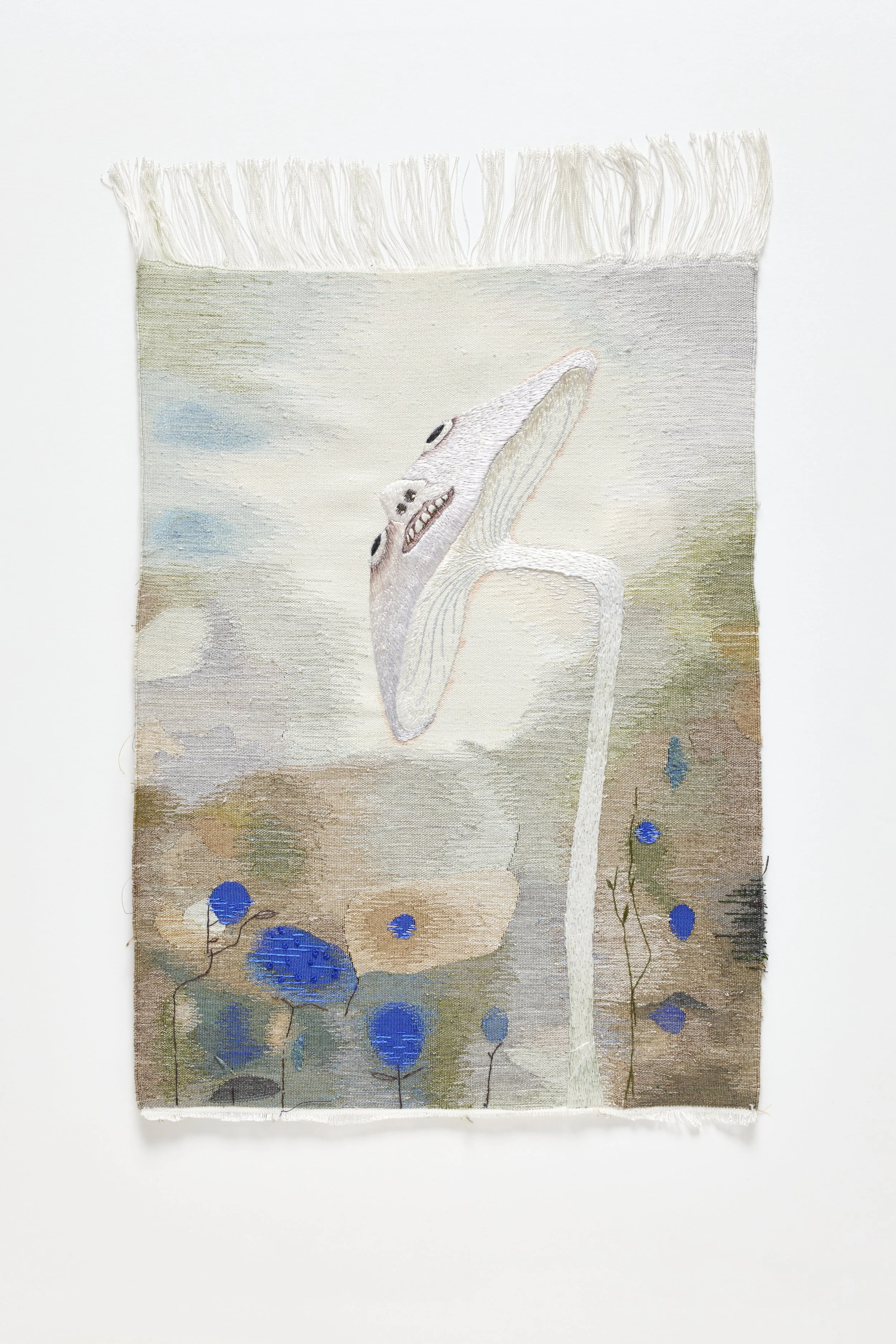
Sanya Kantarovsky × Taka Ishii Gallery
Taka Ishii Gallery · Art Basel · 2022-2023
A New York artist’s watercolor transformed into a rare textile work by some of Kyoto’s most exceptional hands.
thé-En brought together the Master Shikkai and Master Dyer — both with works held in the permanent collection of the Victoria and Albert Museum — alongside Japan’s last remaining atelier for Wa-shishu embroidery and one of the last craftsmen in Kyoto able to weave Tsuzure-ori, the oldest weaving tradition in Japan, where every thread is plucked by the weaver's nails.
One work was dyed with moss, leaves, flowers, mud, fungi, shell, and lapis lazuli, then carried into weaving and embroidery. The other used vintage Hikihaku foils over 70 years old, applied to washi, cut into threads finer than hair, and woven into silk by hand. Few living artisans can still work with these materials.
Both pieces continue to change color. After these craftsmen are gone, works like these cannot be produced again.
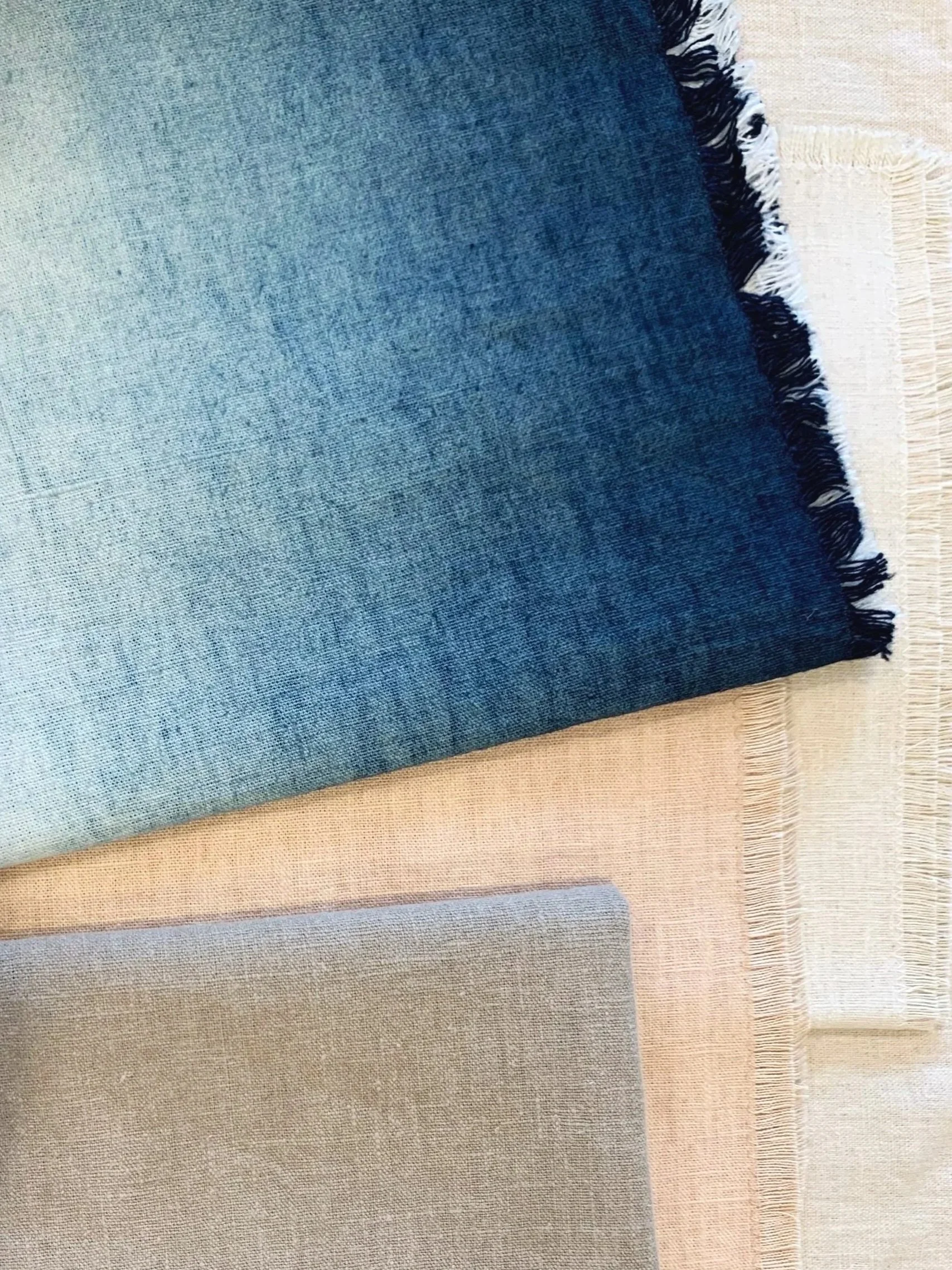
E-E Home Amagansett
Capsule collection · 2022
Kitchen linens, placemats, coasters, and table runners developed for an American retail setting through the work of the artisans behind Oshima Tsumugi — a 1,300-year textile tradition often called the Queen of Kimono. Plant dyes, repeated mud washes, and hand-worked Ryukyu Indigo brought depth, softness, and tonal complexity to the textile.
The ombré pieces were hand-dipped in Ryukyu Indigo from Okinawa — turned and rocked by hand, dozens of times, to build soft gradations at millimeter precision. The two-color pieces required even greater control so that the dyes could meet without collapsing into muddiness. Only a handful of dyers in Japan can do this work. The collection also included two Kurimayu silk table runners and a Kurimayu gown dyed in the same indigo — bringing rare material knowledge into daily life through touch, use, and repetition.
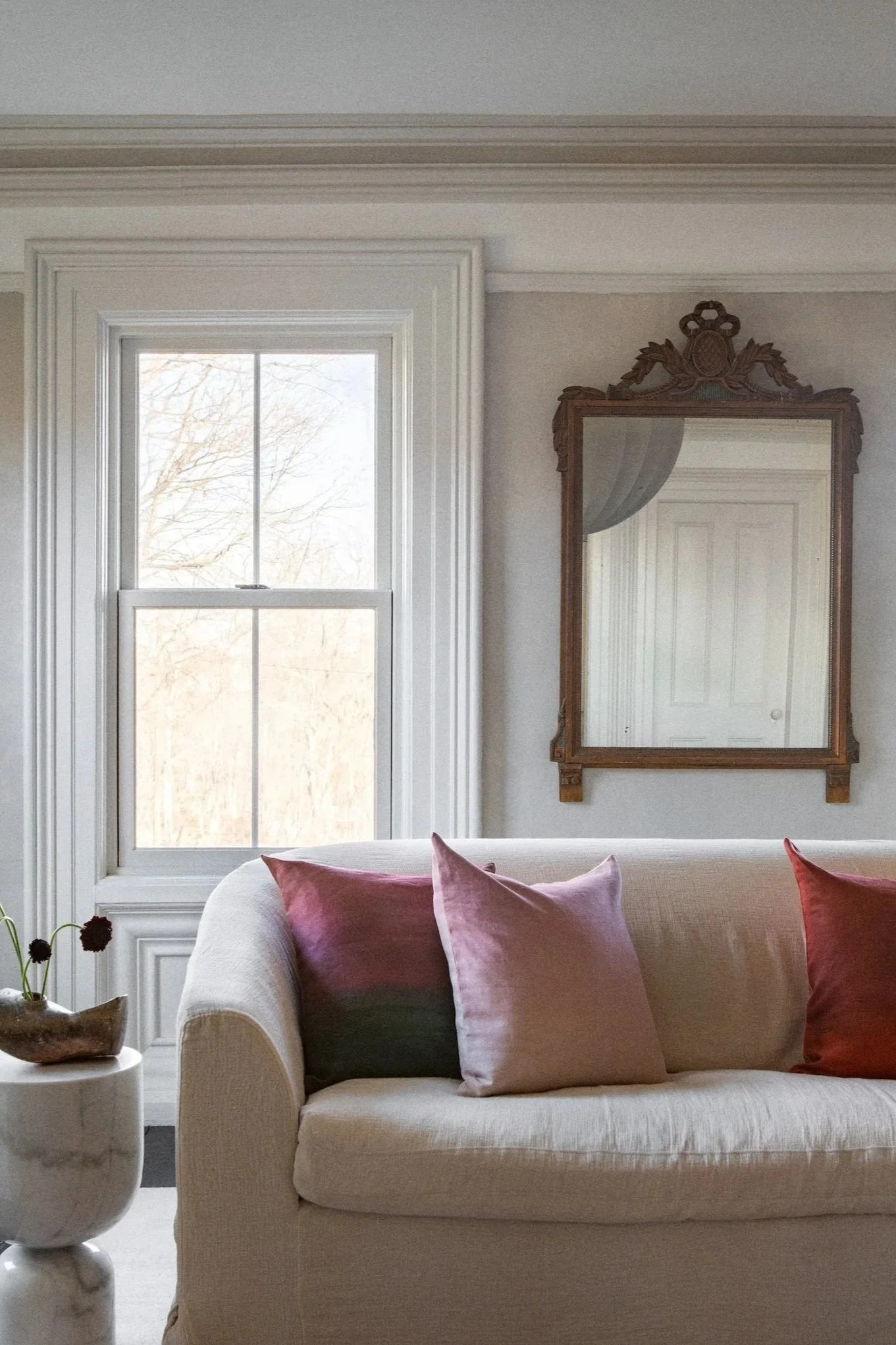
Morea
Kitchen & Home Linen Development · 2022
Textiles for everyday life, shaped through three distinct strands of making. In Amami Oshima, the artisans behind Oshima Tsumugi hand-dye kitchen linens using plants, brewed pigments, and repeated mud washes that give the cloth depth, softness, and tonal complexity. In Kyotango, the handwoven Strata pillow draws on a region shaped by silk production and the textile culture of Tango Chirimen. In Kyoto, the gradated ombré pillows were dyed in persimmon tannin — the same dye, yet each unfolding in entirely different colors and atmospheres. These are works meant to be touched daily, where material knowledge continues through use rather than sentiment.
Heritage technique, not behind glass, but in your hands every morning.
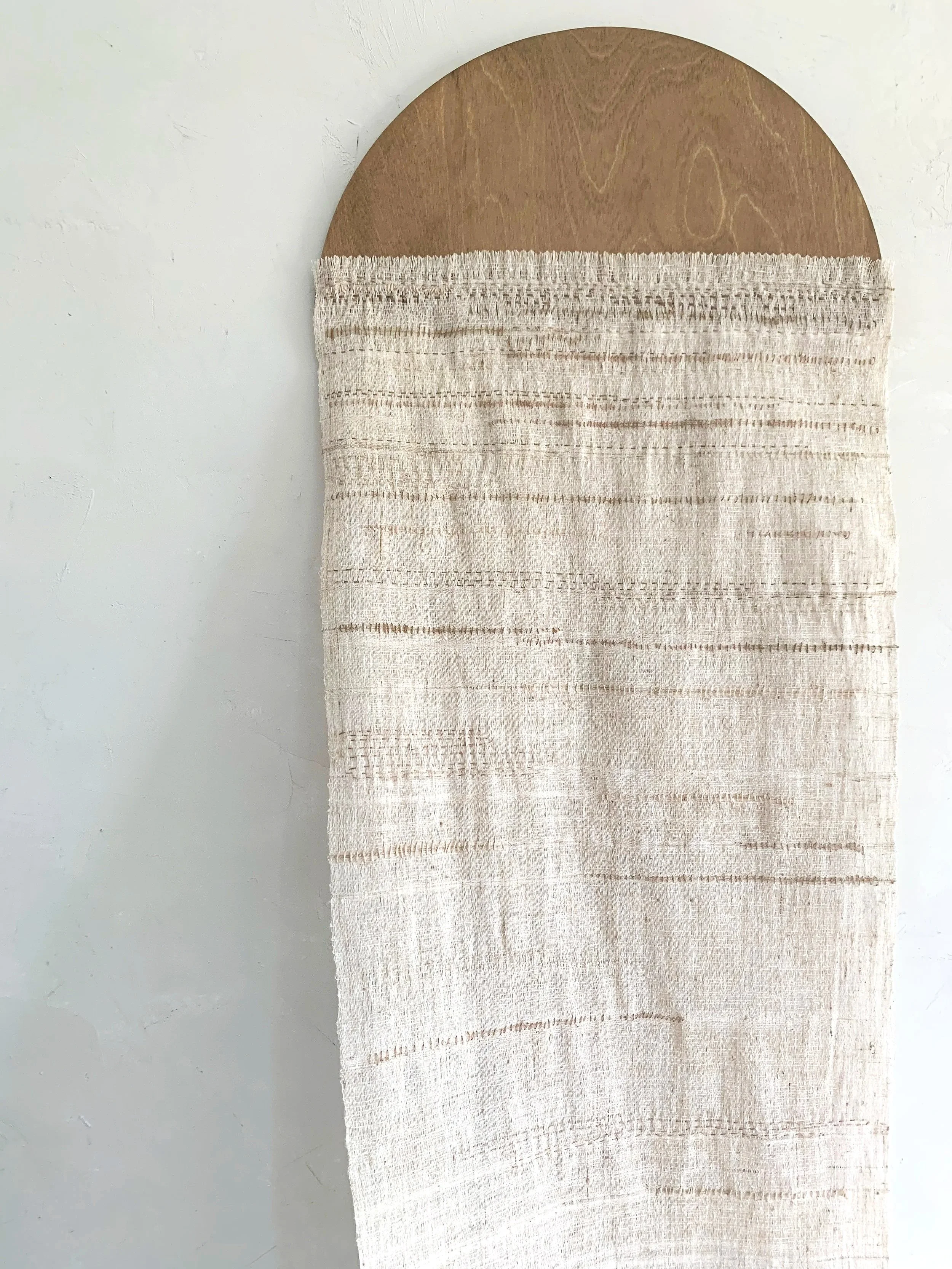
Filiz Soyak
Textile Art for a private home · 2022
A handwoven silk work completed by the artist through hand-stitching, made not for display alone, but to live in a home.
In collaboration with Turkish-born artist Filiz Soyak, thé-En developed a single textile work in rare Kurimayu — silk from silkworms fed exclusively on chestnut leaves, handwoven in Japan, then carried further by the artist's hand. Conceived for a private home in upstate New York, the piece allowed hand-stitching, texture, and ombré movement to become part of lived space rather than gallery distance. Textile here holds artistic integrity not outside life, but within it.
Calico Wallpaper
Site-specific textile development for a shared table · 2024
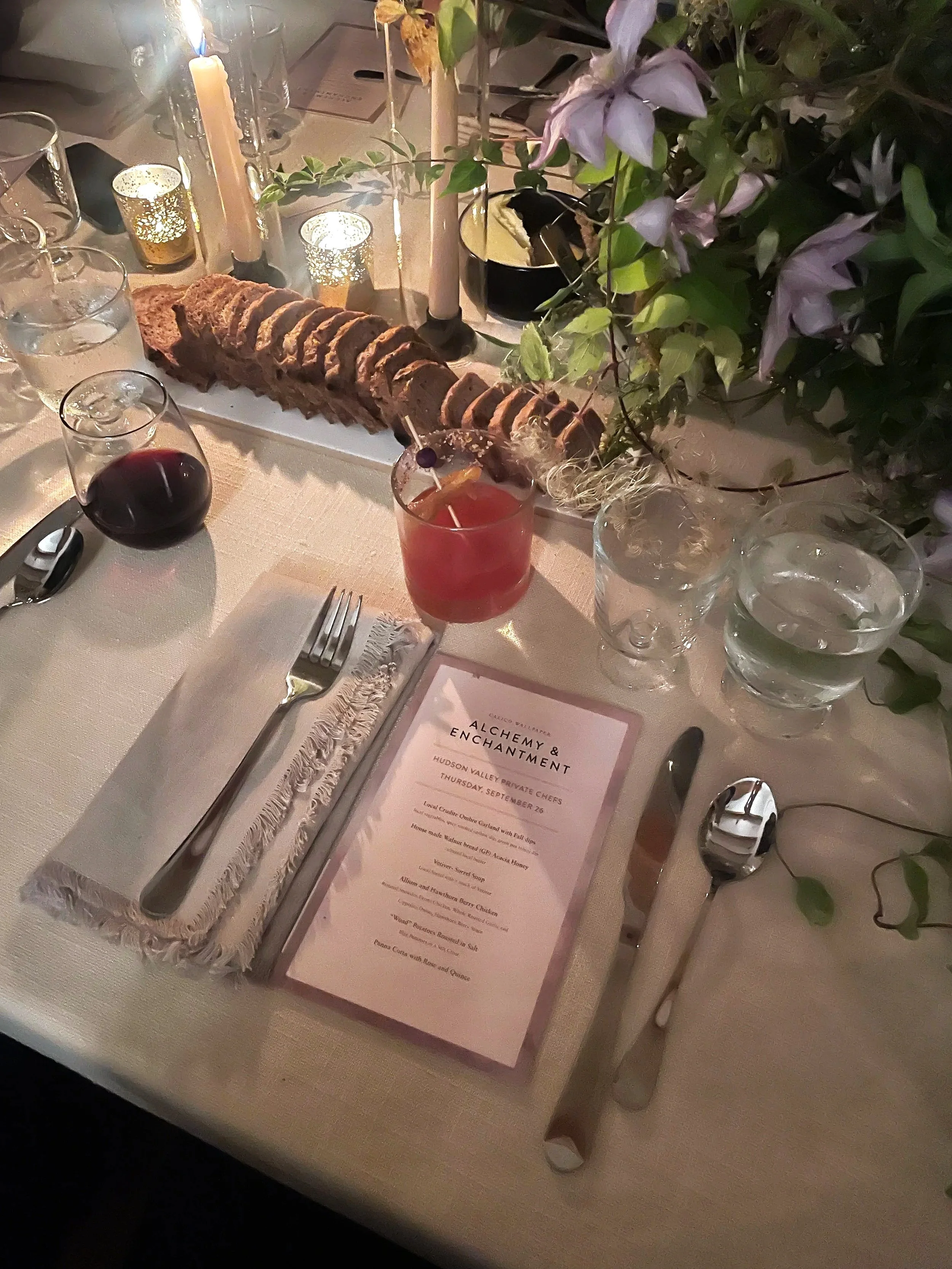
Hand-dyed Japanese linens at a shared table, where color, cloth, and hospitality were brought into quiet alignment.
For the launch of Calico Wallpaper’s Alchemy & Enchantment collections, artist Janene Ping’s locally foraged Hudson Valley pigments met linens plant-dyed on Amami Oshima by artisans behind one of Japan’s most prized kimono traditions.
The room itself was shaped by a series of plant-dyed silks suspended in the air, so the napkins were not meant to compete for attention, but to belong fully — bringing real textile presence, weight, and tactility to the table, in tune with the landscape, the setting, and the room.
Two dye worlds, shaped by different landscapes, meeting across a shared table.
Ladies & Gentlemen Studio
Contemporary lighting · 2024
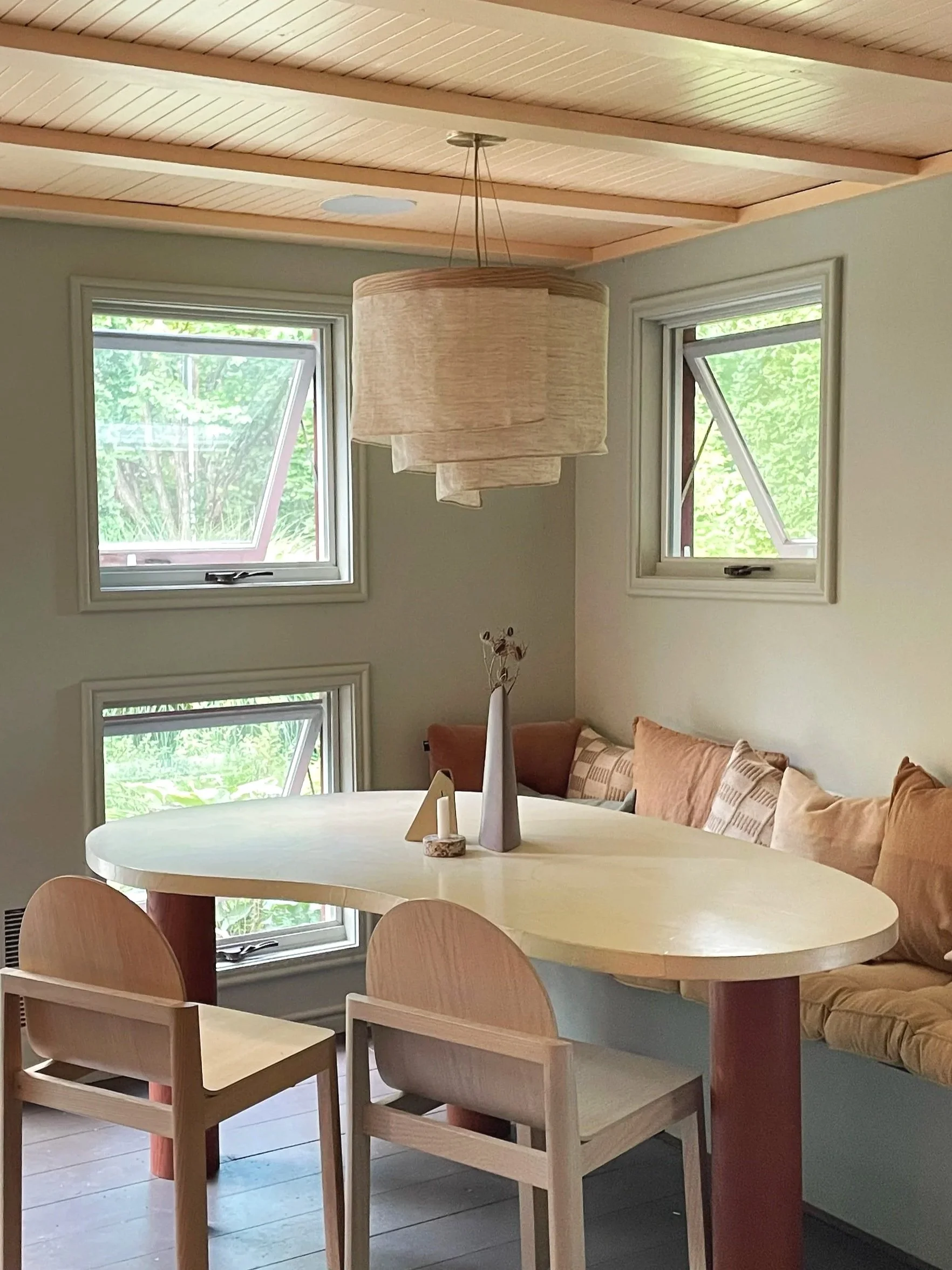
A lighting prototype shaped through the Shikkai process, where a feeling was carried into material through rare wild silks from Kyotango.
Ladies & Gentlemen Studio first encountered a limited group of textile samples carried by thé-En—not as a catalogue, but as points of entry into a material conversation. They came with a feeling rather than a fixed specification: something translucent, lightly structured, but neither too stiff nor too soft. From there, the work moved through several rounds of developed samples until the right material presence emerged.
The final piece used two handwoven wild silks: muga, a golden-brown silk from silkworms fed on magnolia leaves, and kurimayu, a pale chestnut silk from silkworms fed on chestnut leaves. Both are rare, irregular, and can only be woven by hand. Traditional material intelligence shapes a new object without losing its integrity.
作・為・造 Vol. 1 — 視ゆ MIYU
One-of-a-kind obi · Exhibition · Tokyo · 2025
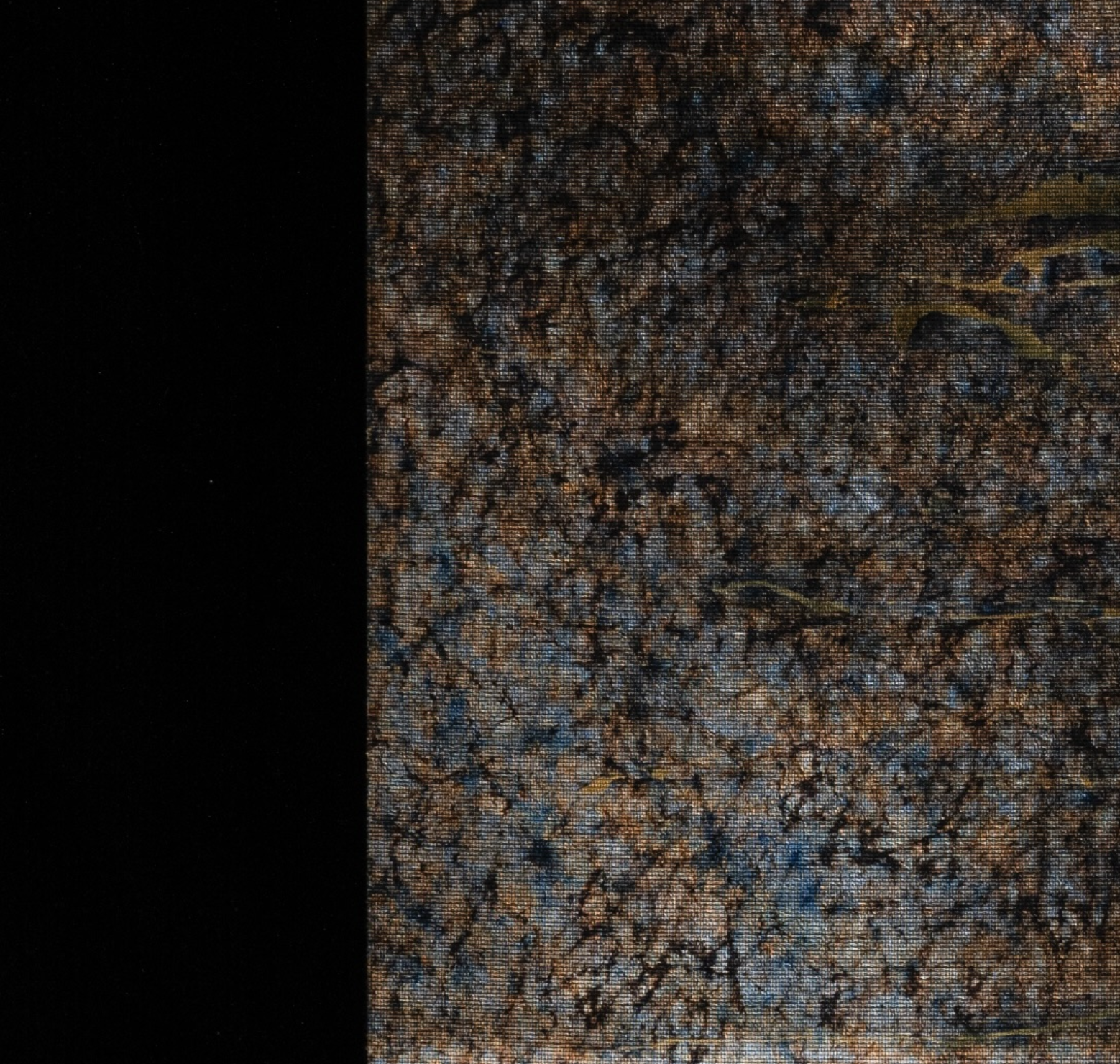
An obi woven in Hikihaku from 70-year-old foils dyed with indigo and persimmon — producing patterns and colors that cannot be replicated.
Rust-gold veins, capillary-like marks, and tears in the washi remain visible through the weave. Not designed. Not predicted. What emerged was 作為なきもの — beyond human intention.
One piece. Unreproducible. Craft, material, and time made something no one planned.
Isetan Shinjuku
Limited-edition tea box in paulownia wood · 2026
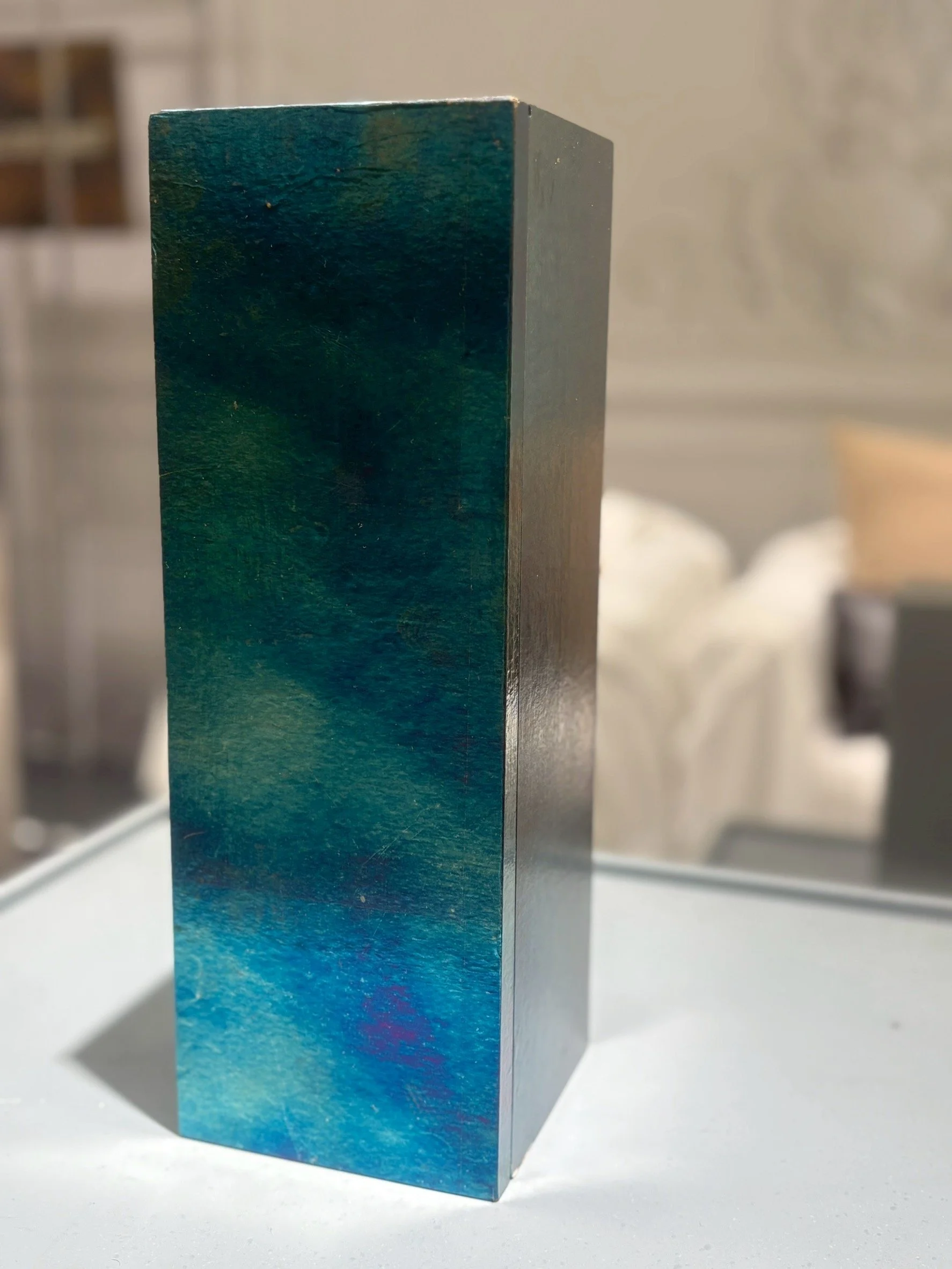
A limited-edition tea box made for a special occasion — with the presence of an art piece rather than conventional packaging.
For Isetan Shinjuku, thé-En developed an object in paulownia wood finished with vintage foils and mother-of-pearl shaved to a fraction of a millimeter — thin enough for light to pass through, glowing blue against black lacquer. What appears small in scale carries the same depth of making as the larger works.
The hands behind this object are the same craftsmen who shape thé-En’s textile collaborations, including the Master Dyer and the Master Shikkai, whose work also stands behind our most exacting textile projects. The knowledge does not belong to one category alone. It moves from woven surface to lacquered form, from cloth to vessel, while the standard remains the same.
What mattered here was not scale, but rigor.