
The Makers
The hands behind the work.
The unseen
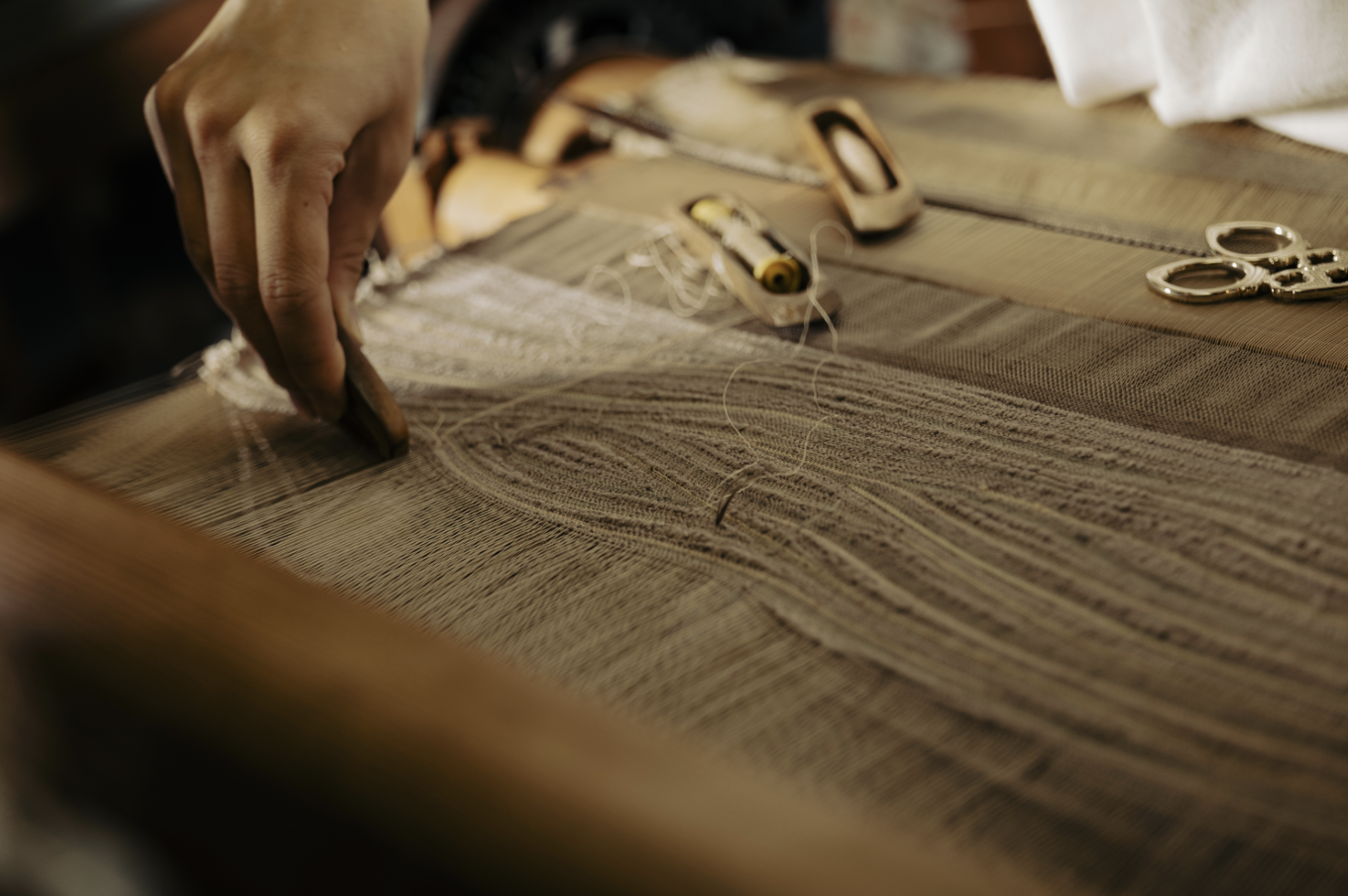
In the Japanese kimono tradition, a single work passes through many hands — each responsible for one part of the process. A dyer is not a weaver. A weaver is not an embroiderer. The knowledge is deep because it is specific.
thé-En works with makers across textiles, lacquer, metals, and paper — hand weavers in Kyotango, plant dyers in Amami Oshima, foil specialists working with vintage materials that can no longer be produced. Many are among the last practicing their technique.
The makers we work with are not part of an open market. Many operate across multiple kimono houses. Some have contributed to works connected to the Imperial Household. Most cannot be publicly named. Their work is not scalable. In some cases, it will not continue beyond them. Access like this is not built quickly. It is carried.
Our makers carry forward traditions shaped over generations, yet remain largely unseen — present not in the spotlight, but in the work itself. Like ghosts behind the work, they are felt through what they make.
the two masters
At the center of much of this work are two hands. Master Shikkai and Master Dyer — one conceives, the other realizes. One holds the whole; the other holds the surface.
Master Shikkai · Nishijin, Kyoto · 75+ years
One of the last working shikkai in Kyoto’s Nishijin district. Over more than seventy-five years, he has shaped approximately 200 obi for one of Kyoto’s most distinguished houses, a 280-year-old atelier.
-
His hands have changed shape through decades of weaving — formed by repetition into movements no younger craftsman’s hands can make.
He has worked barefoot since childhood and still does at eighty-four. The works he produces cannot be replicated after him. He is now able to produce one new work per year.
Master Dyer and Restorer · Kyoto · 55+ years
His parallel career as a restorer has taken him inside some of Japan’s most protected cultural properties — National Treasures and Important Cultural Properties across the country, works held by the Nara National Museum, and, in 2022, the Seiryōden of the Kyoto Imperial Palace.
-
He holds the designation Kyō no Meikō 京の名工 — Master Craftsman of Kyoto.
The dyes and finishes in the works held by the Victoria and Albert Museum could not have been achieved by any other living dyer. His techniques are inseparable from the shikkai’s vision: one conceives, the other realizes.
The Victoria and Albert Museum also documented their work in a film that offers a rare glimpse into their ateliers — the first time these doors were opened to the public — and into the level of craftsmanship behind these techniques.
Our Textiles
The hands, materials, and places behind what we make.
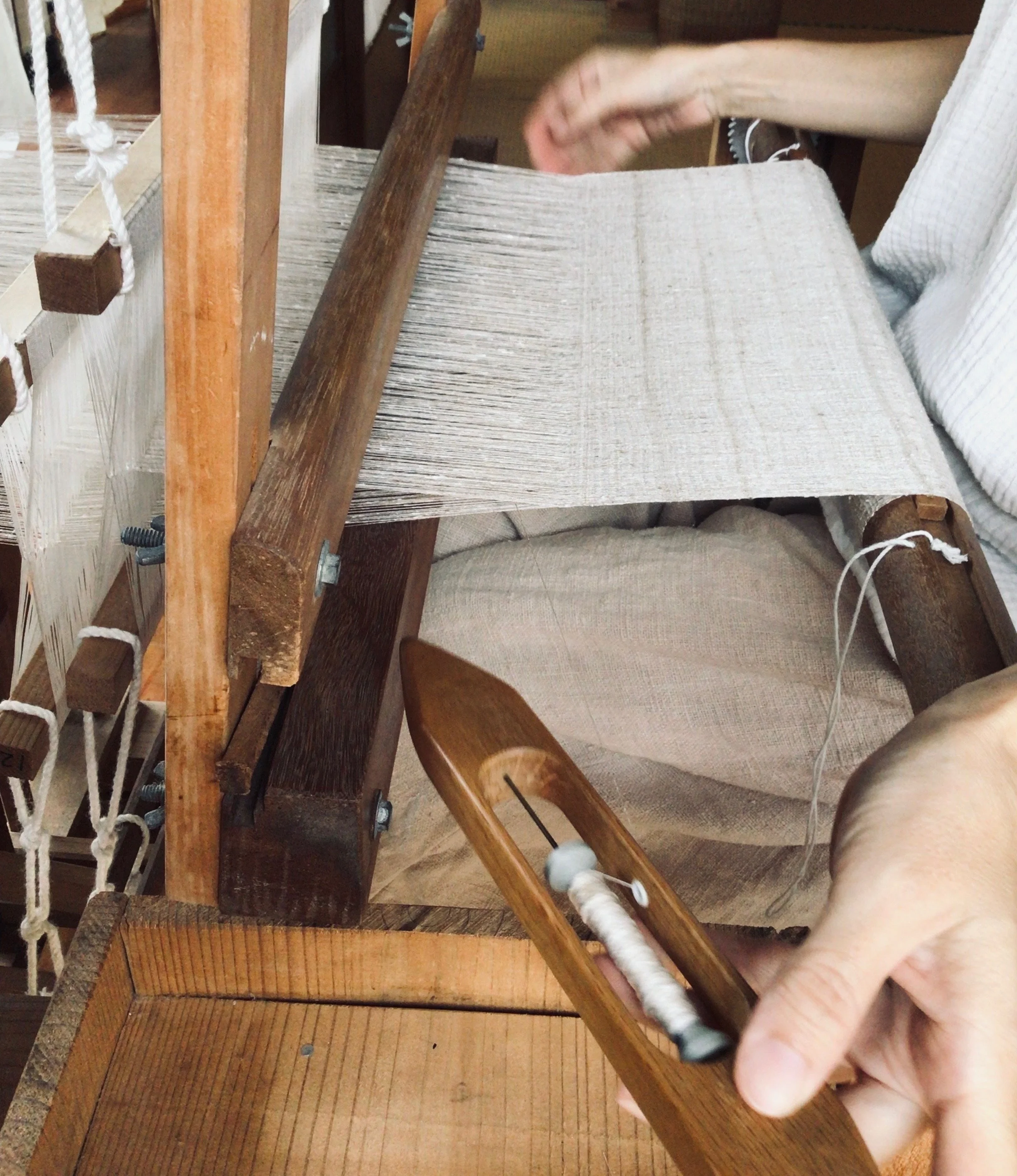
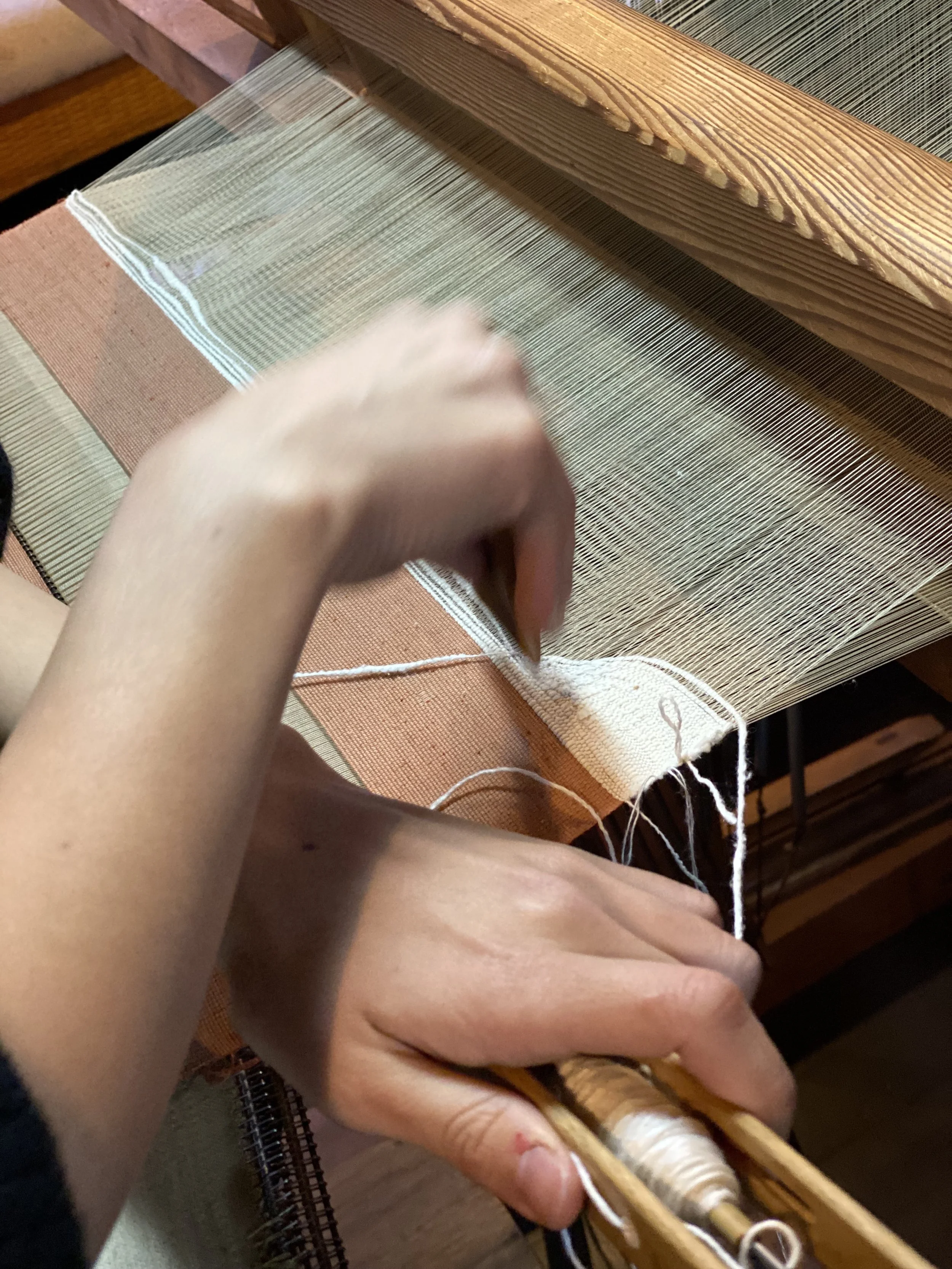
Chestnut silk — handwoven Kurimayu silk. On the loom in Kyotango, home to the Tango Chirimen tradition. The area once had an entire road lined with weaving studios. Most have closed. Our craftswoman is among the few still working with hand-weaving looms, and one of even fewer who weaves this rare chestnut-leaf silk.
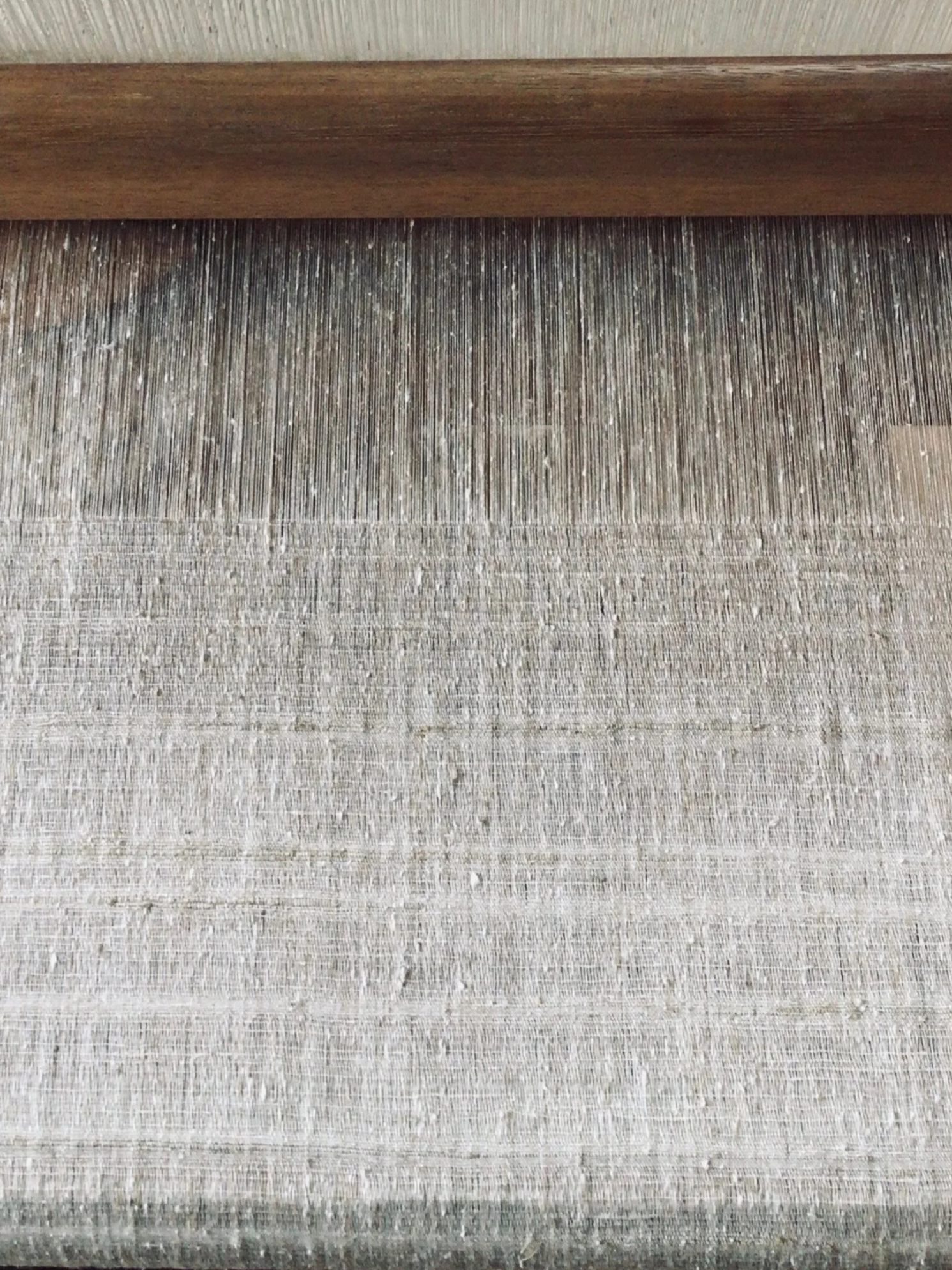
Chestnut silk — table runner in the making. Kurimayu cloth taking shape on the handloom. The silk comes from silkworms fed exclusively on chestnut leaves, giving it a luster and weight only this material can carry. Each piece is woven slowly, by hand, one pass at a time.
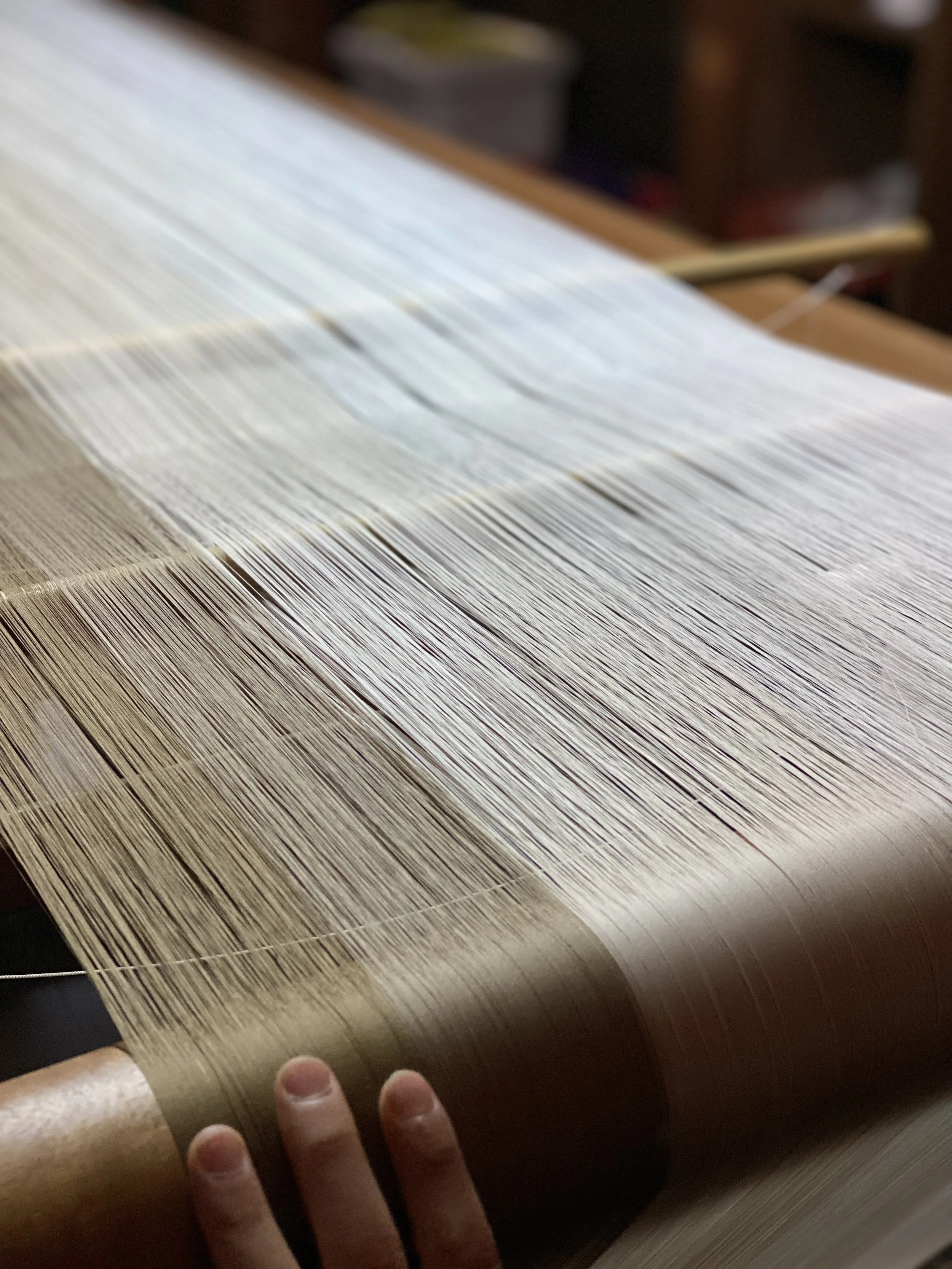
Natural silk — the warp, ready for weaving. The fiber carries its own character — color, texture, and weight vary depending on origin, season, and the silkworm's diet. This is where every piece begins.
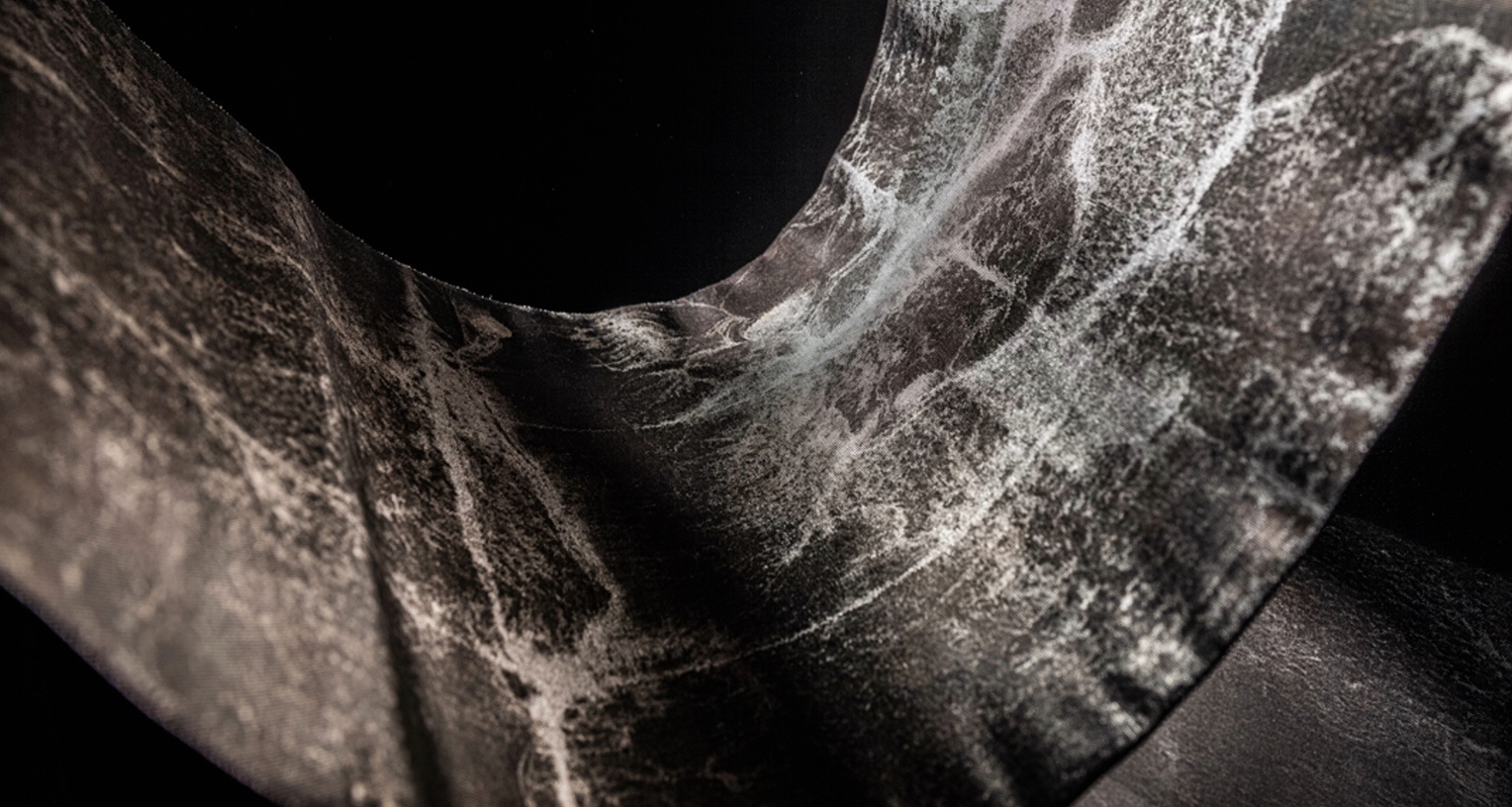
Silk twill — handwoven Hokusai waves. An intricate wave pattern that requires such precision in the weave structure that only one person in Japan can still produce it. This is not a printed design — the pattern is created entirely through the rhythm and architecture of the weave itself.
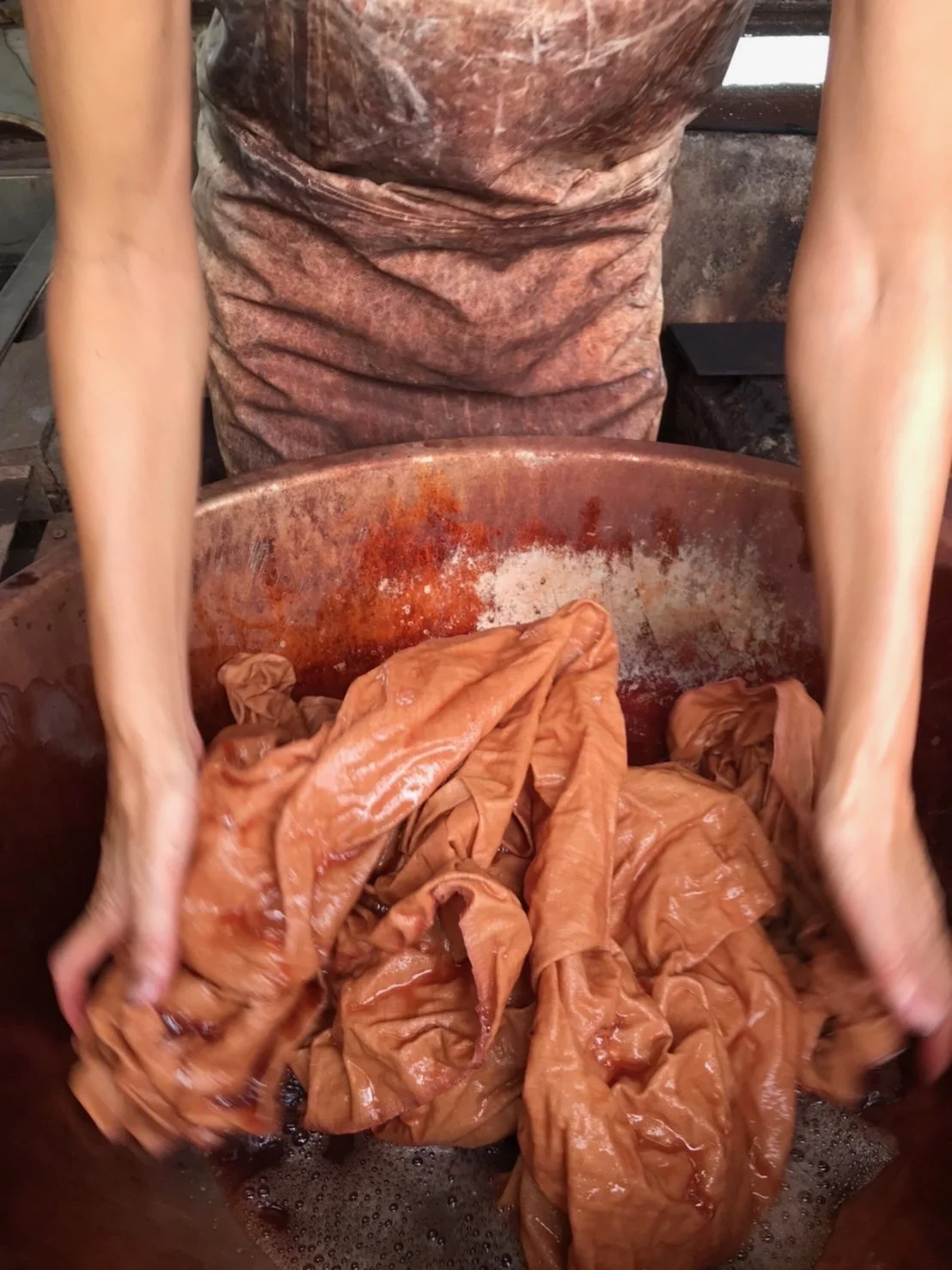
Hemp — plant-dyed in shell ginger. Hand-dyed in Amami Oshima, a small island and home to the Queen of Kimono, Oshima Tsumugi. The dyers harvest plants locally and brew the dye multiple times. Different seasons and humidity levels produce different shades — no two batches are identical.
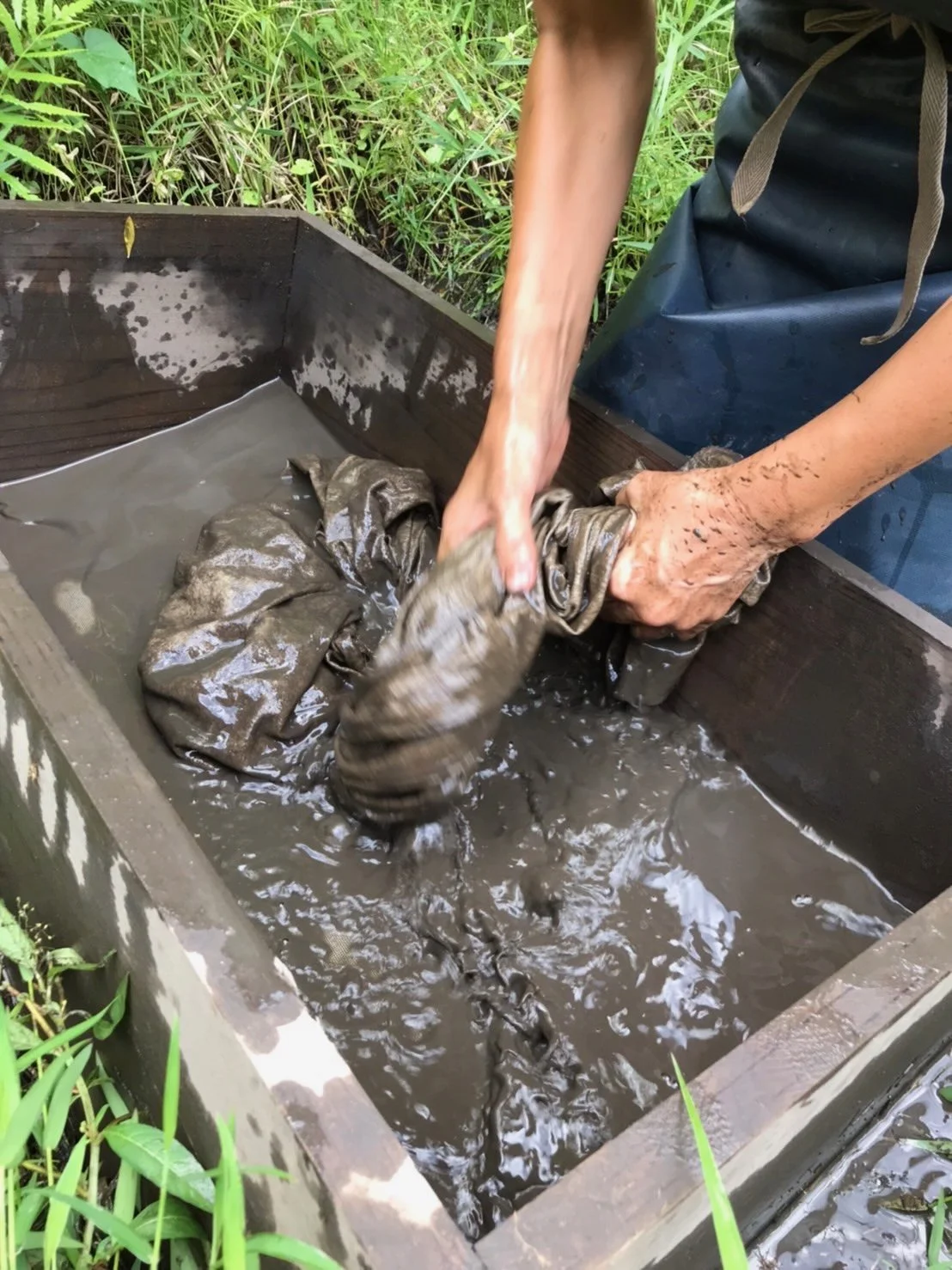
Hemp — mud-dye process. After plant-dyeing, the cloth is washed in iron-rich island mud to set and deepen the color. These dyers in Amami Oshima carry one part of that chain.
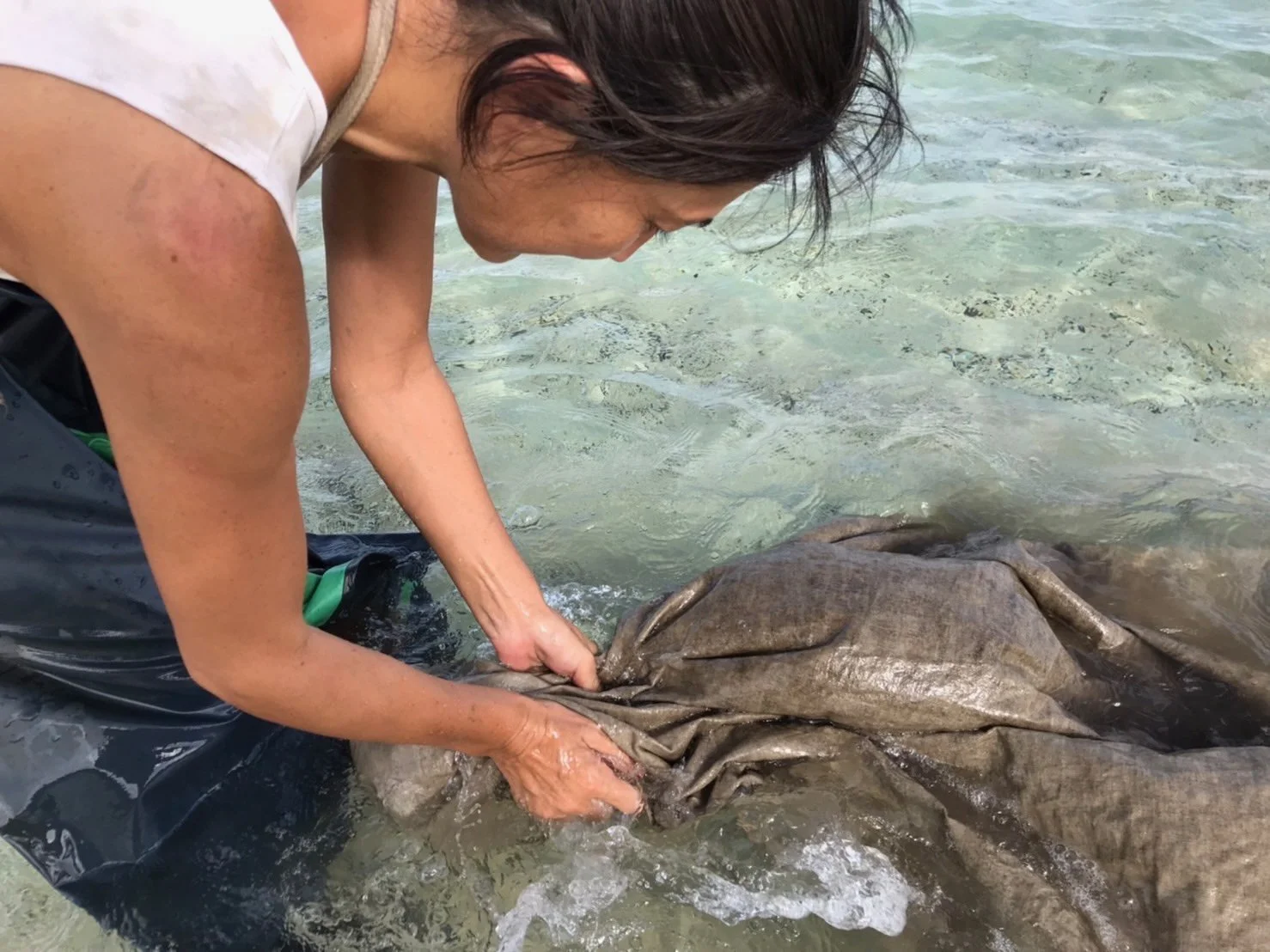
Hemp — ocean-rinse. The final step: cloth is rinsed in the ocean to wash away excess mud and reveal the finished tone. This process — plant-dye, mud-wash, ocean-rinse — gives the textile a depth and quiet complexity that continues to shift over time.
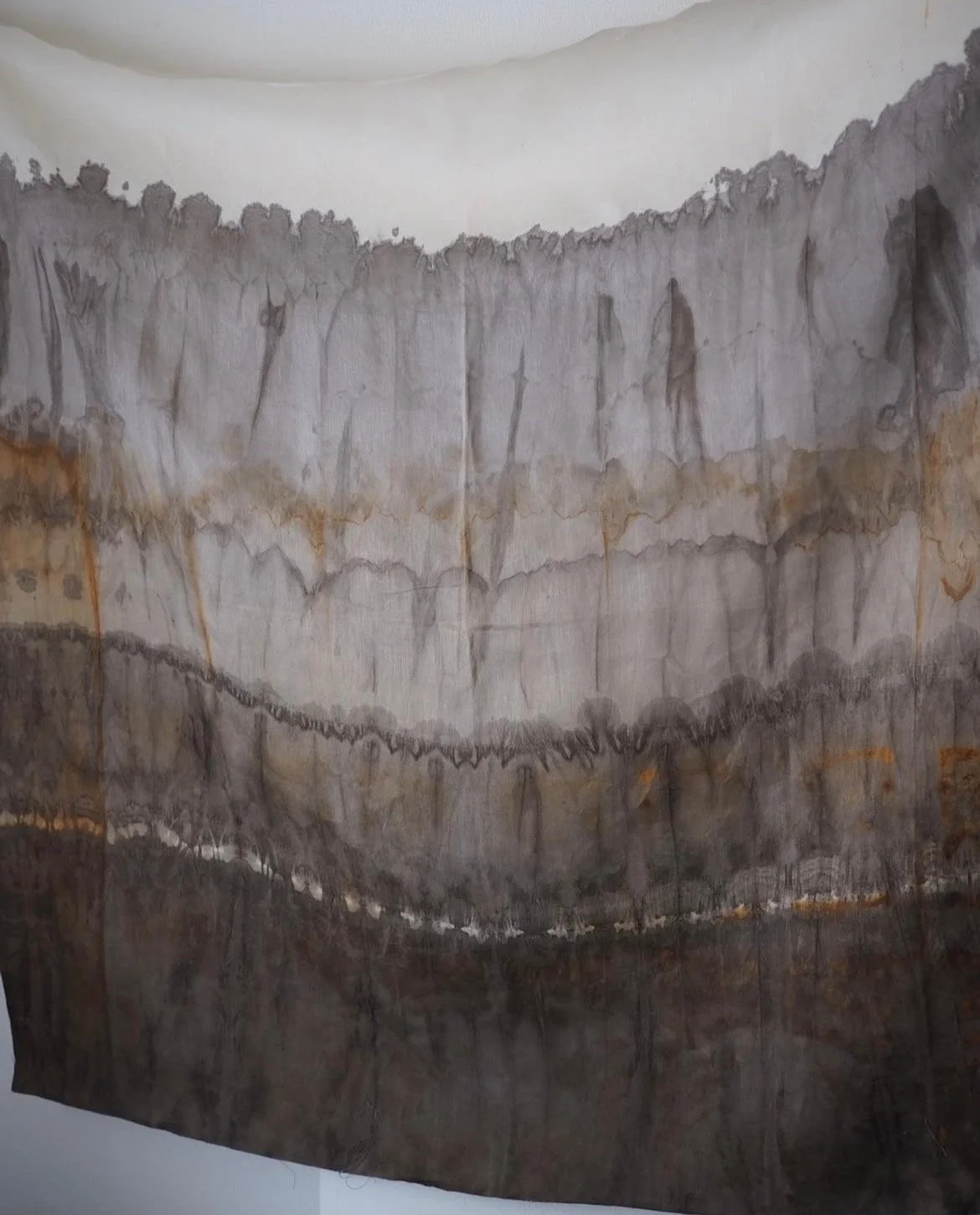
Silk — persimmon Hikizome (brush dye). Persimmon tannin applied directly to silk by brush. Hikizome is a hand-dyeing method where the dyer controls color, saturation, and gradation through touch alone. The result is a surface that holds the gesture of the maker's hand.
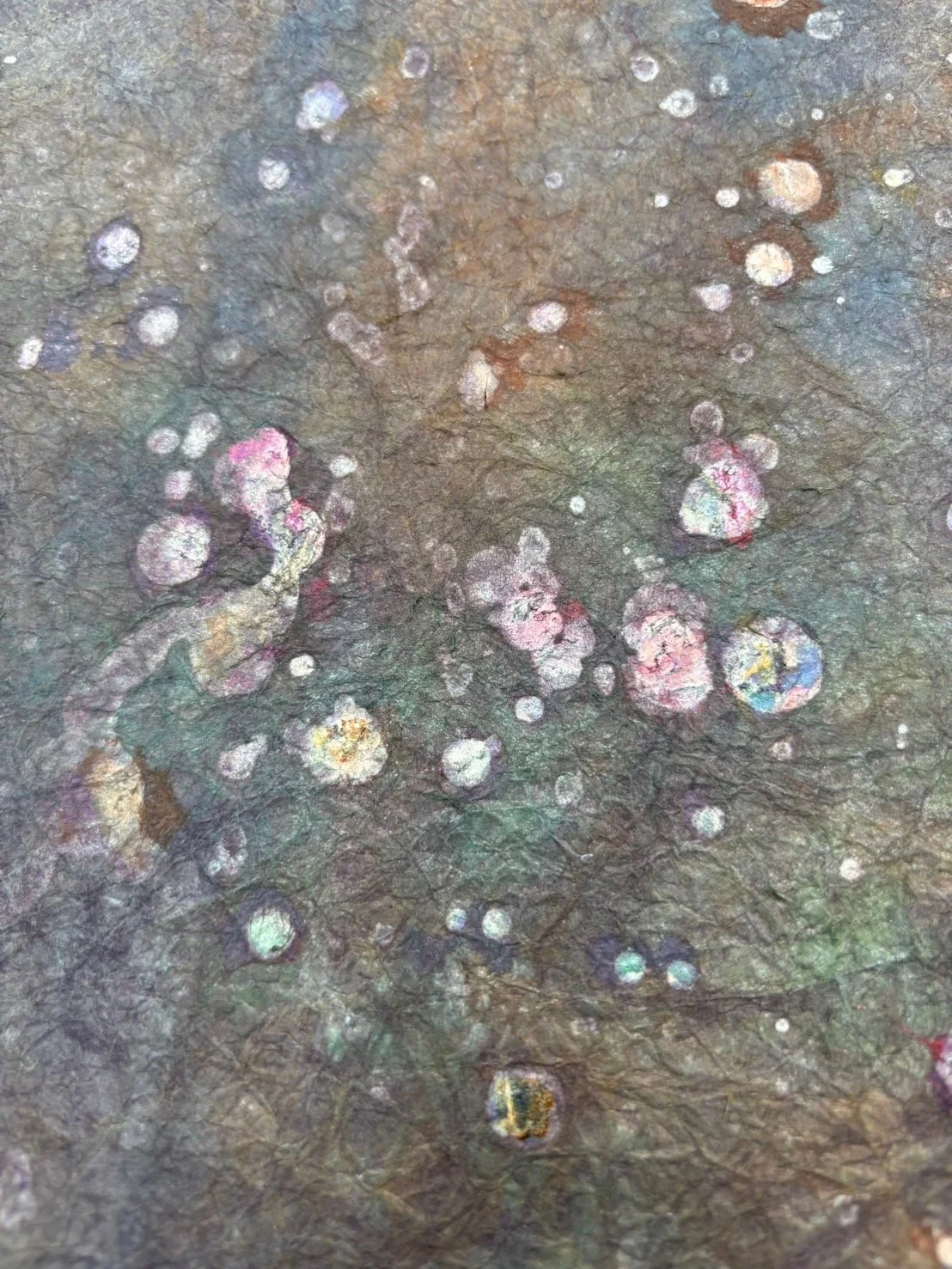
Washi paper — plant-dyed mineral foil. Washi paper layered with vintage mineral foil and dyed with plants. This is the material in its pre-woven state — the foil will be cut into threads finer than hair and woven into silk to become Hikihaku brocade. At this stage the material is fragile; it only becomes durable once woven. These vintage foils, some over seventy years old, were dyed in conditions that no longer exist. They will never look the same again.
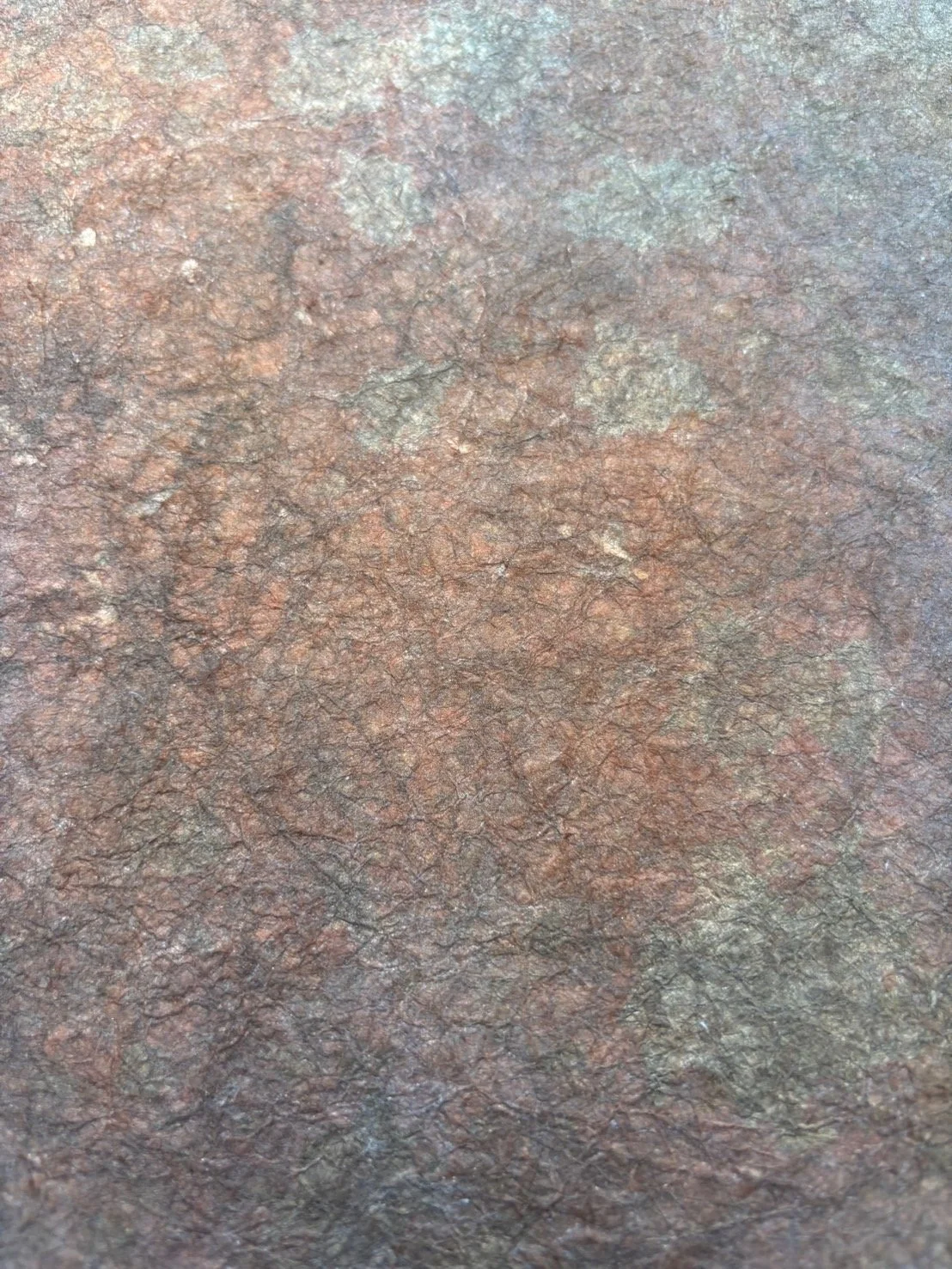
Washi paper — plant-dyed mineral foil. The same material, different outcome. Because each foil is dyed by hand with natural materials, variation is inherent — color shifts with the plant, the season, the water, and the age of the foil itself. What you see here is a material that is, by definition, unrepeatable.