Filiz Soyak: Kurimayu Art Piece
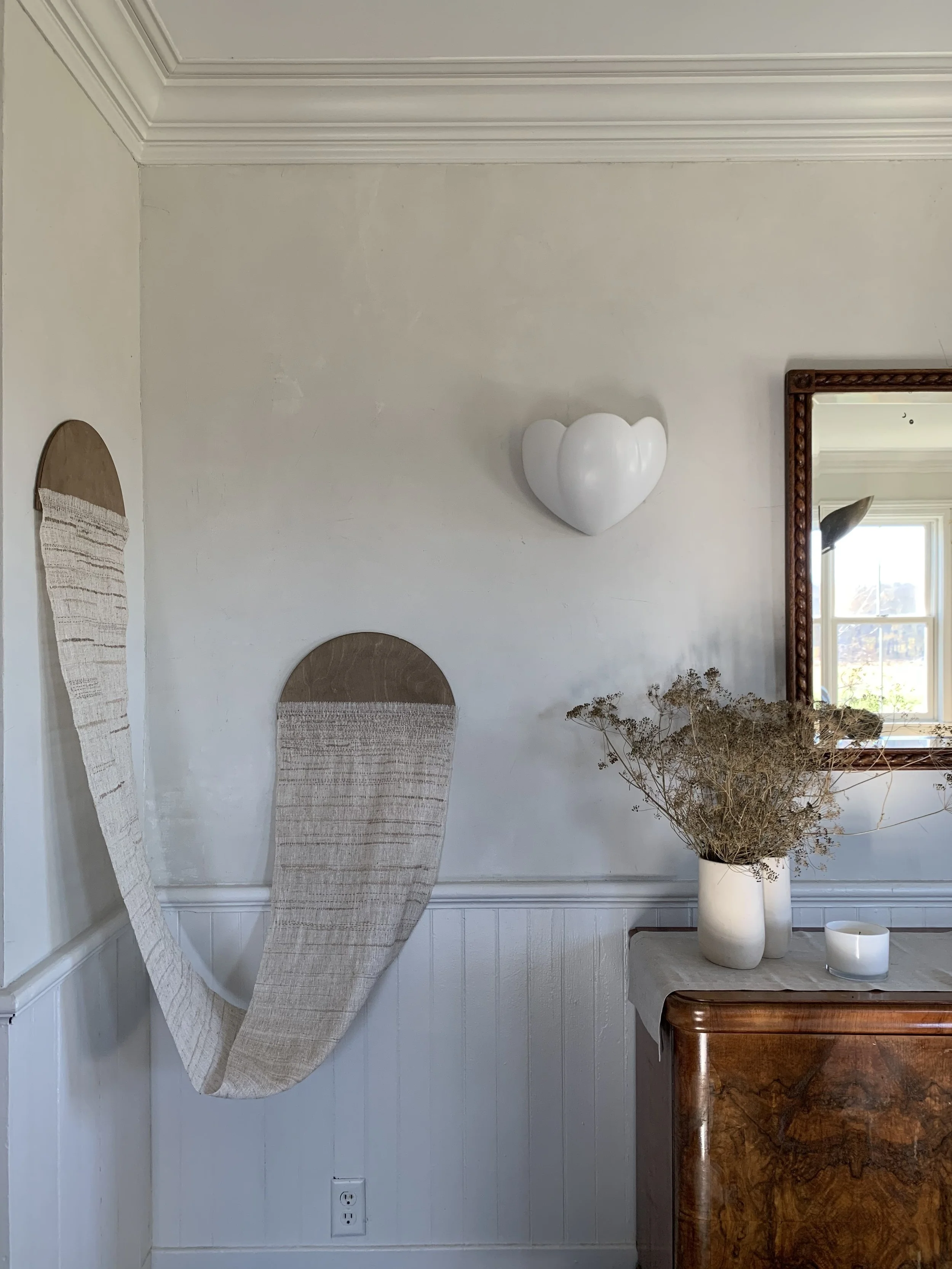
A single hand-stitched work in rare chestnut-leaf silk, handwoven in Japan and completed by artist Filiz Soyak for life in a private home.
Project Overview
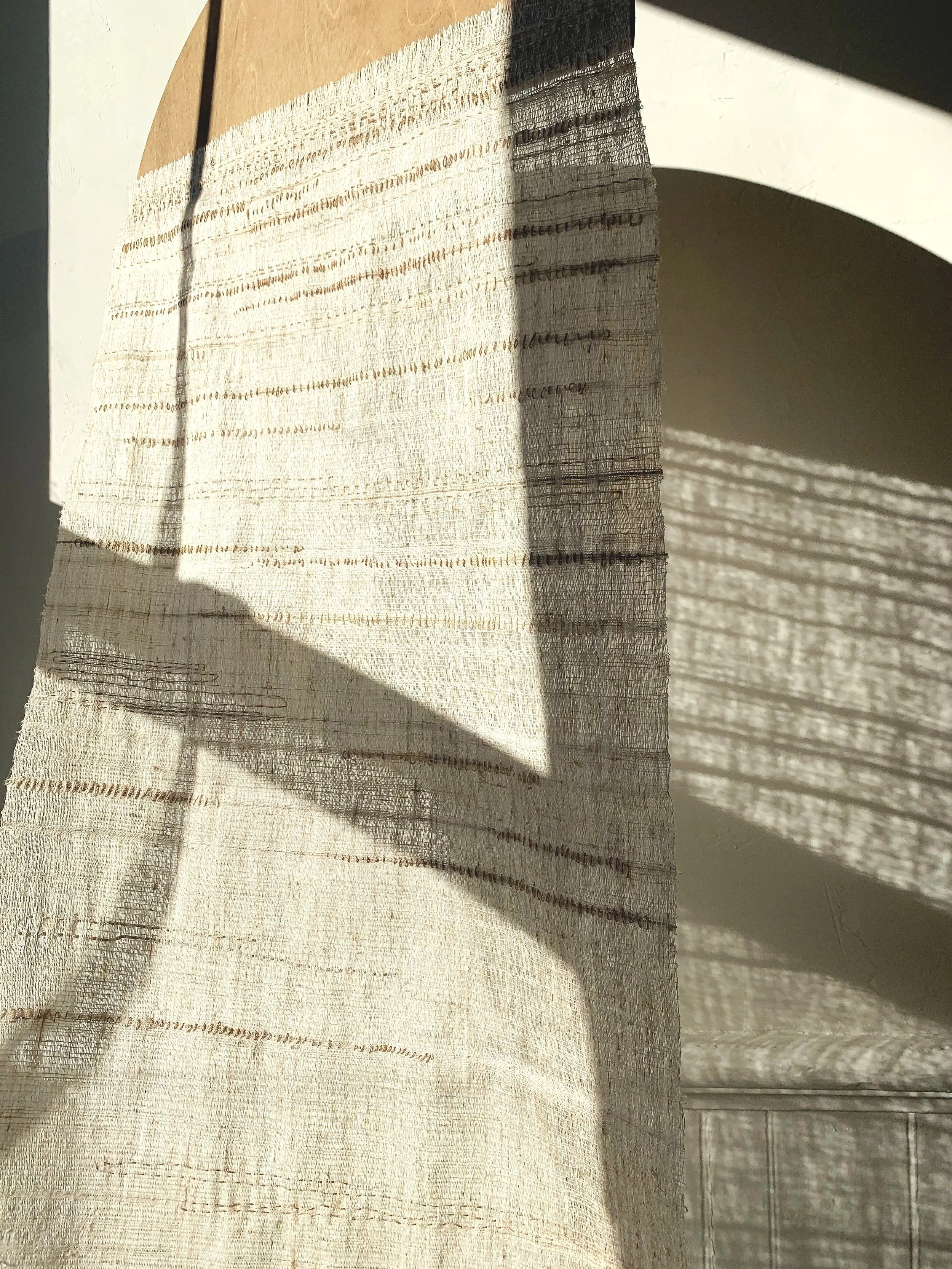
In collaboration with Turkish-born artist Filiz Soyak, thé‑En produced a single textile work centered on kurimayu—a rare Japanese silk produced exclusively from silkworms fed on chestnut leaves. The silk was first handwoven in Japan by our craftsman, then sent to Soyak, who completed the piece through deliberate hand-stitching, introducing ombré movement across the surface with her own breath and tempo.
Unlike exhibition-oriented commissions, this work was conceived for a private home in upstate New York. It was shaped not for a gallery wall but for domestic life—a room, a table, a body. The project reflects a particular conviction: that textile can carry artistic integrity within the spaces where life actually happens.
Background
Kurimayu is produced exclusively from silkworms fed on chestnut leaves, yielding silk with a distinctive subtle luster and weight—characteristics that emerge from the specificity of place and diet. This terroir cannot be replicated through industrial processes or substituted materials. Our craftsman brings decades of experience working with this rare silk, understanding how it moves, how it accepts natural dyes, and how it ages over time. He handwove the cloth that became the foundation of this work.
Filiz Soyak approaches textile as a sculptural and conceptual medium. Her stitching—deliberate, unhurried—transforms the handwoven cloth into a conversation between fiber and gesture. Across the surface, her hand-stitching creates an ombré gradation that carries the rhythm of her own presence: each stitch reflects a choice, each pause becomes visible in the finished work. Because the stitching is done entirely by hand, the piece is unrepeatable. Variation is not a flaw. It is evidence of presence.
Process
The development began with a foundational question: How does textile become personal? The answer arrived not through concept alone, but through close dialogue between material, maker, and artist—understanding what kurimayu is and what it wants to be, working with a craftsman who can honor the silk's specificity, then introducing Soyak's artistic language through hand-stitching that responds to the cloth rather than imposing on it. The timeline was determined by the work itself, not by a production schedule.
Bringing the Work into Space
This piece was not made for exhibition or collection in the conventional sense. It was made for a home—a specific home, in upstate New York—where it enters daily life and changes the quality of a room from within.
The design carries this intention into its structure. Walnut oil–stained half circles appear on both ends of the cloth, allowing the piece to be hung in multiple orientations. This is deliberate. A home is not static—rooms shift, light changes, moods turn over with the seasons. The piece arrives with that understanding built in, offering its owner the freedom to recompose the work within their own space, long after it leaves the maker's hands.
In thé‑En's view, this is where Japanese craft becomes most intimate. Not as an object observed from a distance, but as a work that lives alongside its owner and deepens over time. A hand-stitched kurimayu textile—when made with this degree of care—holds the same artistic integrity as any piece destined for a gallery. It simply chooses a different life.
Closing Statement
This project is not about turning craft into luxury product. It is about allowing material knowledge, regional tradition, and handwork to remain legible in contemporary living. When textile is made this way—with this degree of collaboration and presence—it earns the space it occupies. And it changes how you live with it.
Whats next? Developing a textile collaboration with an artist?
Developing a textile collaboration with an artist? We work with Japanese makers and international artists to create one-of-a-kind and small-run textile pieces for homes, galleries, and collectors.