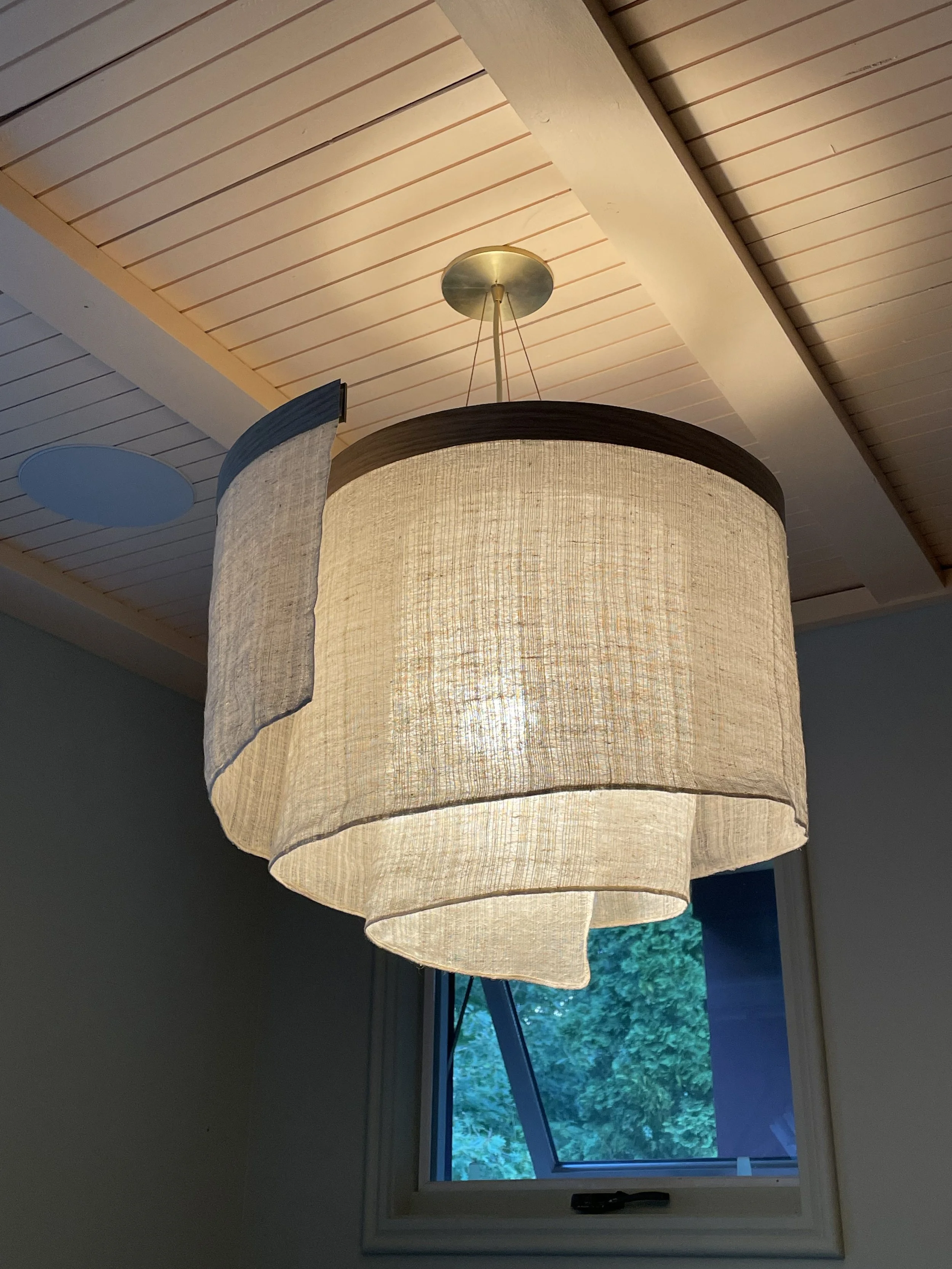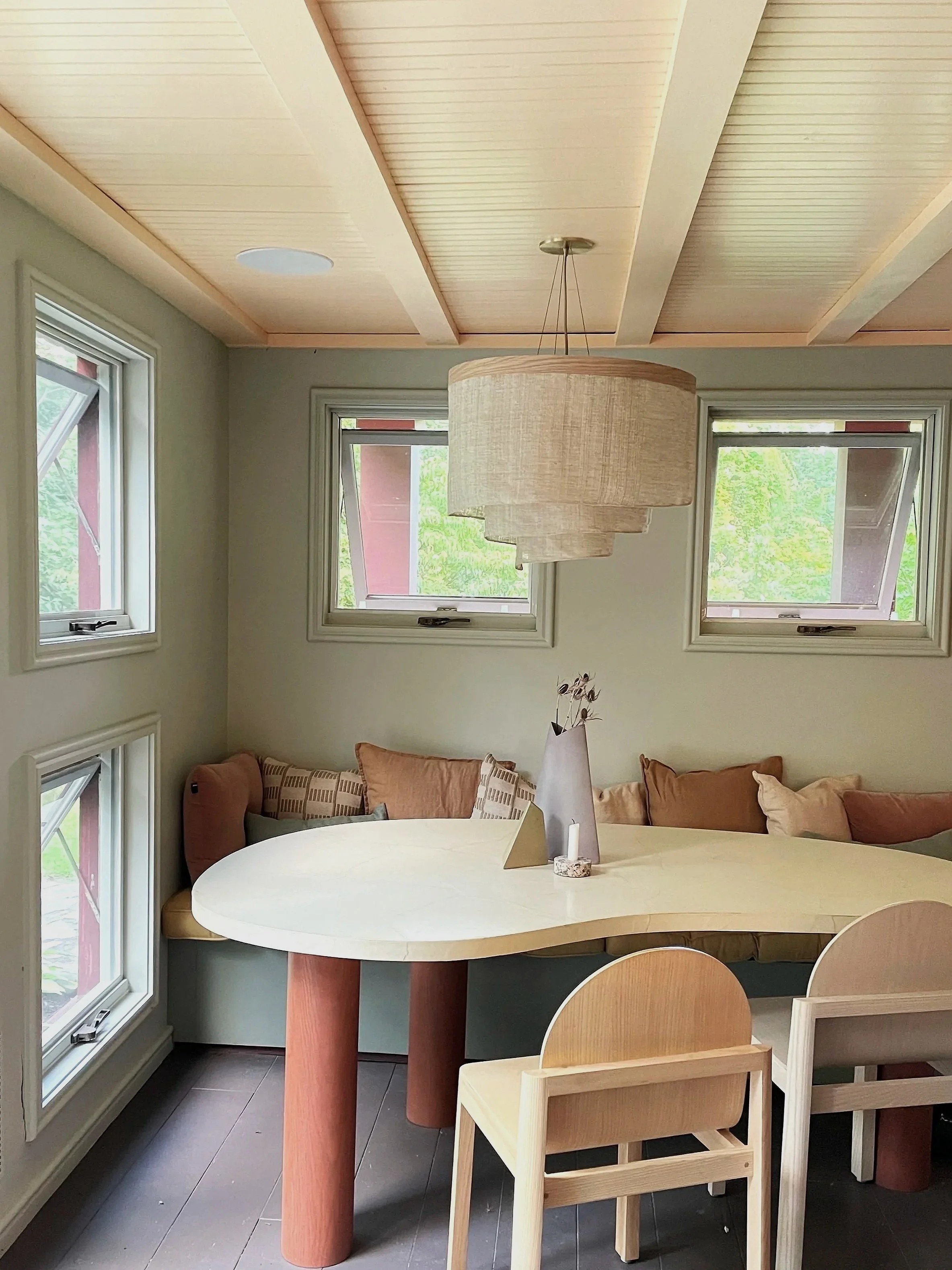
L&G Studio Lamp
A lighting prototype shaped by two rare wild silks — muga and kurimayu — handwoven in Kyotango.
Ladies & Gentlemen Studio first encountered a limited group of textile samples carried by thé-En. We keep only a small and highly selective set — not as a catalogue, but as points of entry into a material conversation. The work is not to offer ready-made options, but to read what a client responds to and develop from there.
They came with a feeling rather than a fixed specification: something translucent, lightly structured, but neither too stiff nor too soft. From there, the Shikkai work began. We moved back and forth through several rounds of developed samples, reading the material against that feeling until this particular combination emerged as the one that matched it exactly.
In 2024, thé-En worked with Dylan Davis and Jean Lee of Ladies & Gentlemen Studio on a lighting prototype for the Upstate Cardinal House. The final piece used two handwoven wild silks from Kyotango: muga, a golden-brown silk from silkworms fed on magnolia leaves, and kurimayu, a pale chestnut silk from silkworms fed on chestnut leaves. Both are rare. Both resist standardization. Both can only be woven by hand.
Wild silk is not obedient material. Its threads are uneven, full of interruptions, and require constant adjustment from the weaver. In this project, that irregularity was not something to be corrected. It became part of the answer. The silk was loosely woven so that light could pass through with a gentle gradation — structured enough to hold form, soft enough to remain atmospheric.
What mattered was not choosing from what already existed, but arriving at the material presence the project was asking for. That is the Shikkai process: reading a feeling, developing toward it, and carrying the work through until it takes its right form.
The result is not a lamp dressed in craft. It is a form shaped by material intelligence. The translucency, the shadow, the quiet softness of the glow — all of it comes from allowing the silk to lead.
What makes the work successful is that it does not read as a heritage gesture or imported reference. It reads as atmosphere. It changes a room without insisting on itself. That is where thé-En is strongest: when Japanese material knowledge enters a contemporary space not as quotation, but as presence.