
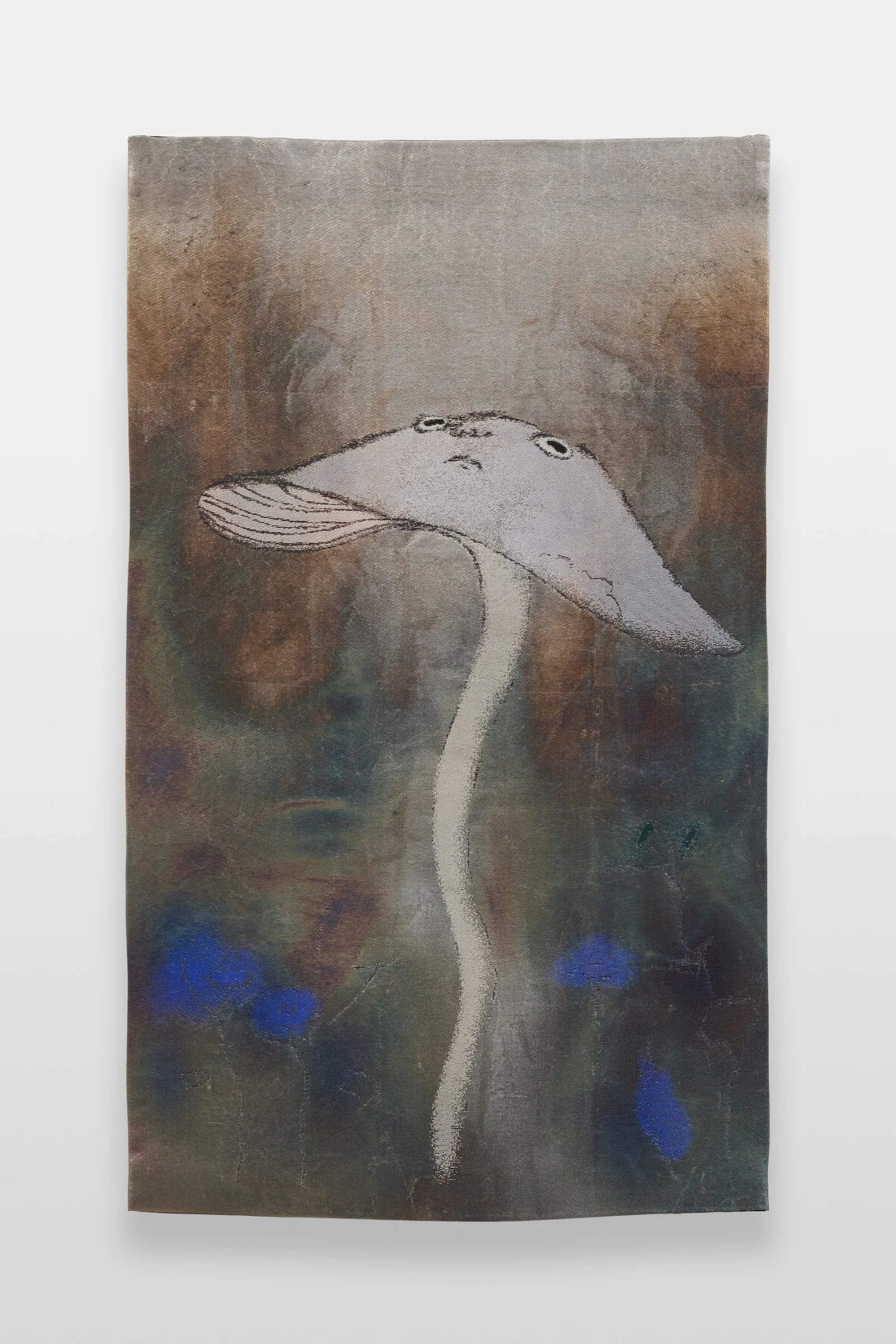
Nishijin Brocade Hikihaku Piece “ Growth”
Sanya Kantarovsky × Taka Ishii Gallery
A New York artist’s watercolor transformed into a rare textile work by some of Kyoto’s most exceptional hands.
For New York-based artist Sanya Kantarovsky’s solo exhibition at Taka Ishii Gallery Kyoto, thé-En worked with the artist’s watercolor as it moved into textile — not as literal translation, but as a shift of medium.
What began as watercolor painting entered the world of Japanese textile making: loom, dye, embroidery, foil, and hand. The result was not an illustration of the original image, but a new work with its own material life. Both traveled to Art Basel, Basel, with Taka Ishii Gallery in June 2023. Source
Two pieces emerged. One was handwoven in Tsuzure-ori, the oldest weaving tradition in Japan, where each thread is plucked with the weaver’s nails. At this level, the work can be carried by only a very small number of hands, including one of the last craftsmen in Kyoto able to weave Tsuzure-ori with this degree of refinement. The mushroom motif was rendered through Wa-shishu, traditional Japanese embroidery carried out by Japan’s last remaining atelier for this technique. The silk and embroidery threads were dyed with moss, leaves, flowers, mud, fungi, shell, and lapis lazuli — materials chosen not only for effect, but for the life they would continue to hold over time.
The second work entered the world of Hikihaku: vintage metallic foils over 70 years old — gold, silver, and platinum, including lacquered foils — applied to washi paper, including lacquered metallic foils applied to washi paper, cut into threads finer than hair, and woven into silk by hand. Few living artisans can still work with these materials. Their fragility is not only technical. It belongs to a set of conditions, skills, and material histories that are disappearing.
The work brought together a rare constellation of hands: the Master Shikkai and Master Dyer who stand at the center of thé-En's most exacting work, Japan's last remaining atelier for Wa-shishu, and one of the last craftsmen in Kyoto able to weave Tsuzure-ori at this level. Between them, more than a century of knowledge — across dyeing, weaving, embroidery, and restoration at the level of National Treasures. The foils, dyes, weaving, and embroidery in these works could not have been brought together by anyone else.
What mattered in this collaboration was not applying Japanese craft to contemporary art as a reference point. It was allowing technique to become part of the work’s inner structure. A watercolor entered textile and became alive in another form — its colors continuing to shift over time, its surface given new life through the hands of its makers. What emerged was not simply a textile translation, but a work of extraordinary rarity — the kind of piece more often encountered in a museum than in the lived world.
Both pieces are still changing color. After these craftsmen, works like these cannot be produced again.
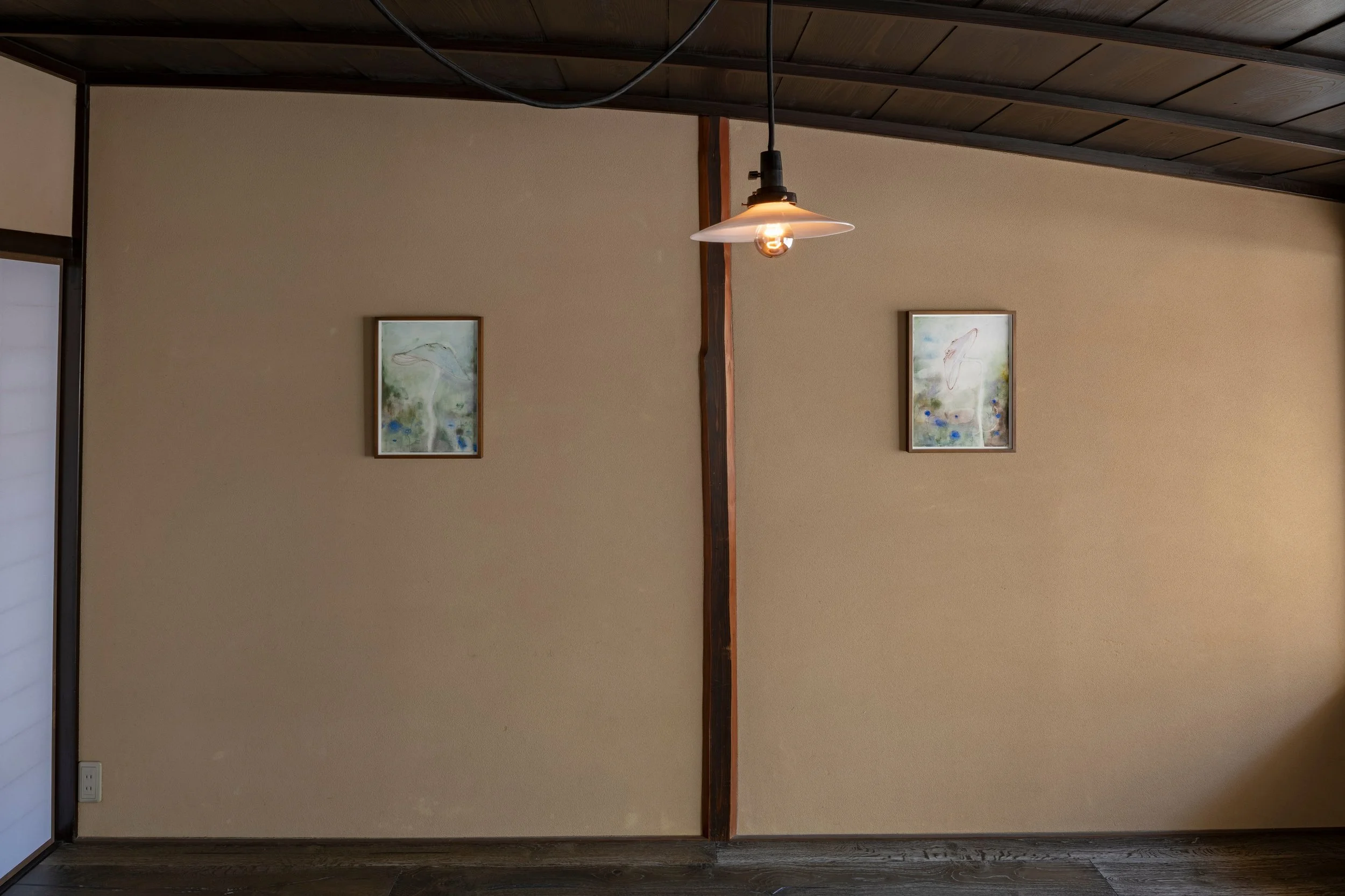
Original watercolor paintings at Taka Ishii Gallery Kyoto, Japan.
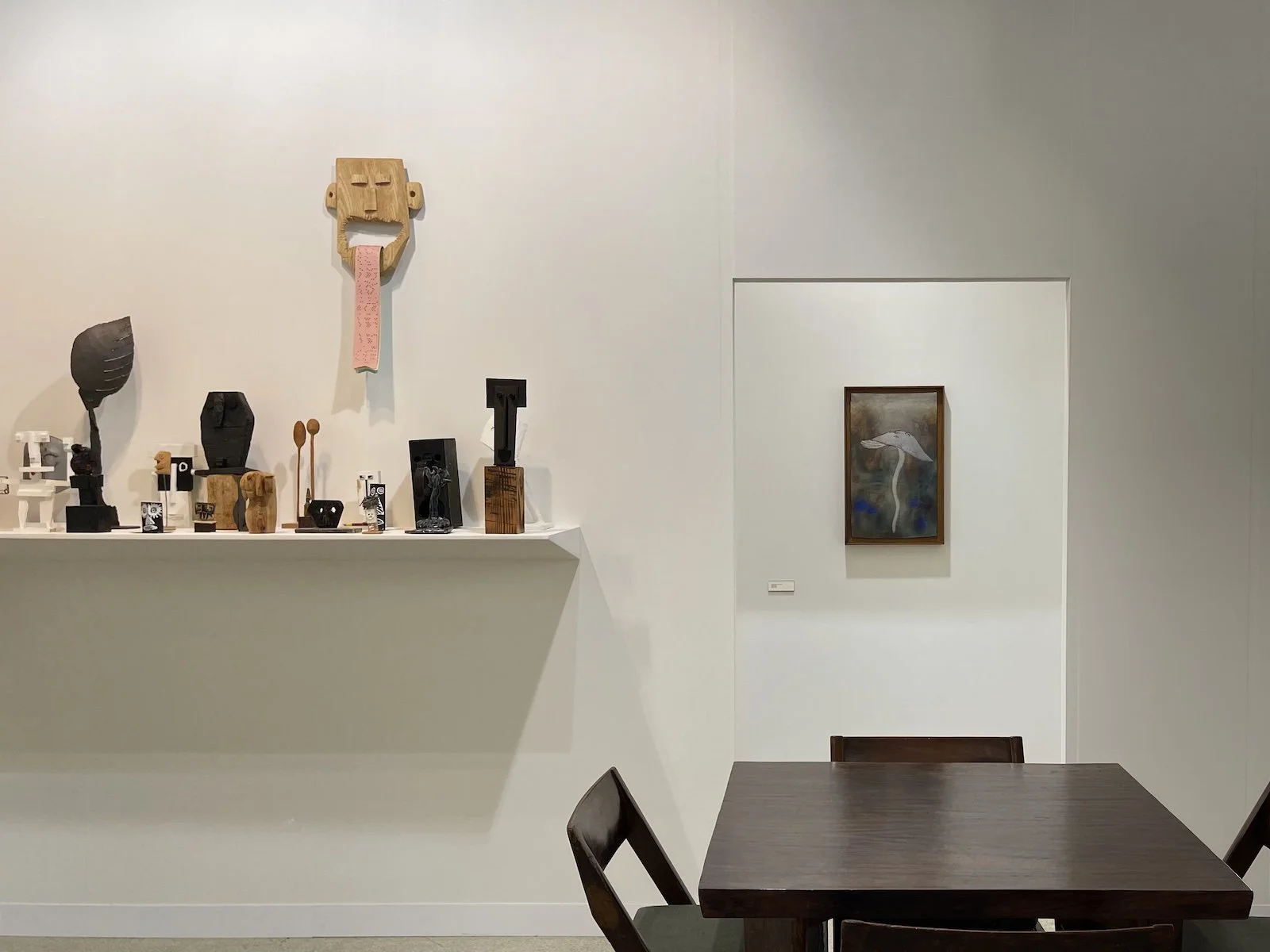
Nishijin Brocade Hikihaku piece “Growth” at Art Basel, Switzerland.
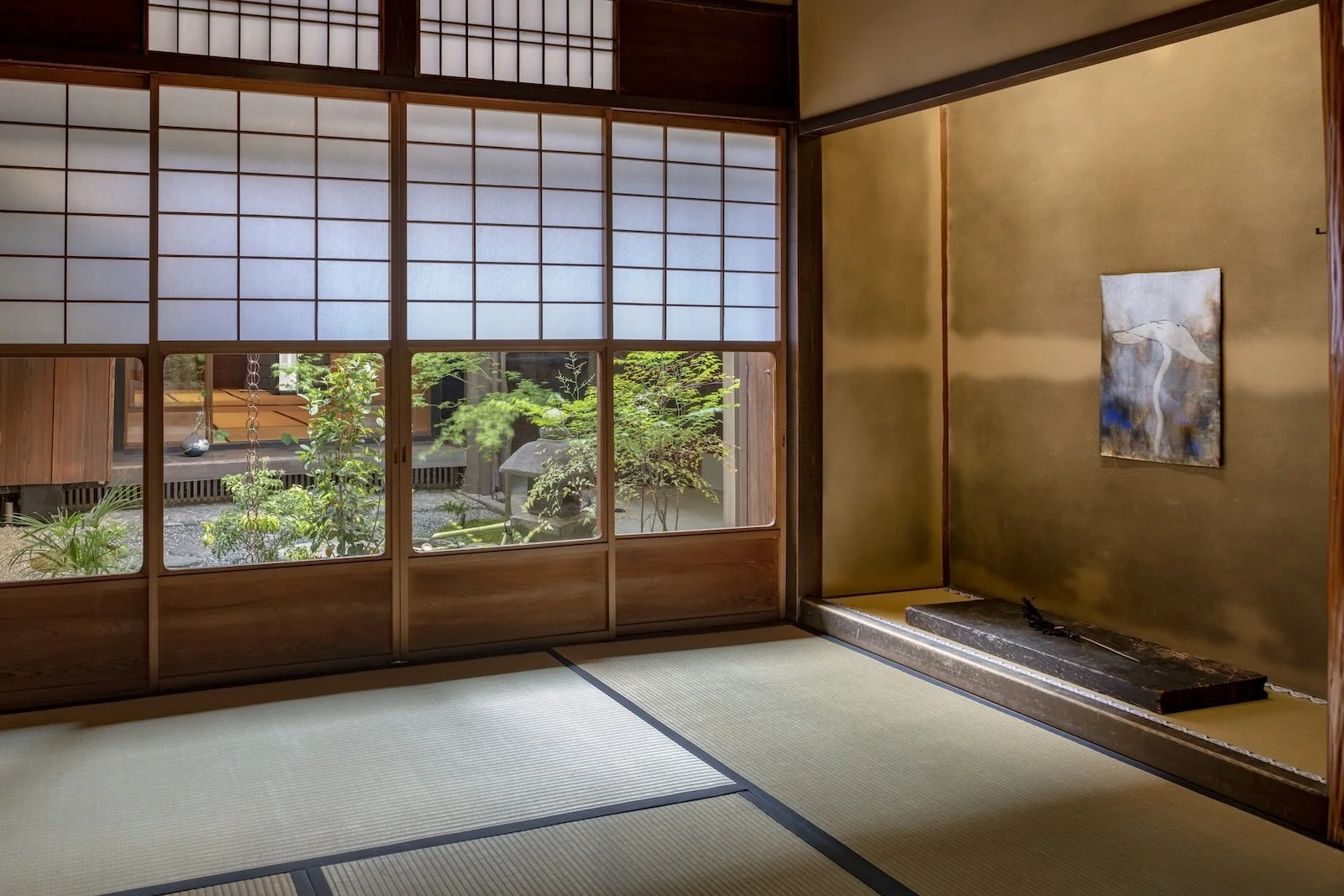
Nishijin Brocade Hikihaku Piece “Growth” at Taka Ishii Gallery Kyoto, Japan.